
J. Biodivers. Conservation 10(2): 253-258
2026
ISSN: 2457-0761 (online)
Bhagwati Prashad Sharma1 and Banshidhar Behera2*
1Department of Botany, Sidharth Government College, Nadaun, Himachal Pradesh, India
2Post Graduate Department of Dravyaguna, Ayurvedic and Unani Tibbia College and Hospital, Karolbagh, New Delhi, India
*Email-Id: drbanshi@rediffmail.com; ORCID: 0000-0001-9982-180X
DOI: https://doi.org/10.5281/zenodo.21068720
Article Details: Received: 2026-05-23 | Accepted: 2026-06-30 | Available online: 2026-06-30
Licensed under a Creative Commons Attribution 4.0 International License
Abstract: The present study set out to explore the antioxidant potential of curry leaves (Bergera koenigii L.) and to back up their traditional medicinal uses. Authors prepared leaf extracts using n-hexane, ethanol and water, then assessed their ability to scavenge free radicals at selected concentrations (0.125–1.0 mg/ml). The results revealed a concentration-dependent inhibition, with the ethanolic extract showing the most impressive activity (79.09–97.84%), followed by the aqueous (70.18–90.26%) and the n-hexane (69.23–78.55%). These findings highlight the potential of curry leaves as a powerful, cost-effective natural antioxidant, which could play a significant role in fighting oxidative stress and enhancing functional foods, nutraceuticals and preventive healthcare for everyone.
Keywords: Free radicals, natural antioxidant, nutraceuticals, oxidative stress, preventive healthcare
Introduction
Bergera koenigii L., commonly known as curry leaves, play a vital role in South Asian cooking (Shivakumar et al., 2019). They are cherished not just for their unique aroma and flavor but also for their impressive nutritional and medicinal benefits (Abeysinghe et al., 2021). These are often called also “Meetha Neem” packed with essential nutrients, these leaves offer a great mix of carbohydrates, proteins, dietary fiber and important minerals like calcium, phosphorus and iron (Khanka et al., 2025). Additionally, they’re rich in vitamins A, C and E. On top of that, curry leaves are loaded with bioactive compounds such as alkaloids, flavonoids, glycosides and tannins, which enhance their health benefits (Balakrishnan et al., 2020). For generations, these leaves have been a staple agent in folk and Ayurvedic medicine, used to tackle a variety of health issues like diabetes, digestive troubles, infections and inflammation (Jachak et al., 2024). This highlights their value not just in the kitchen but also as a natural remedy. Including curry leaves in your diet regularly can help address micronutrient gaps and promote overall metabolic health, making them a cost-effective and readily available resource, especially in areas where they thrive. Curry leaves have been catching a lot of attention lately, especially for their impressive antioxidant properties. With the world increasingly leaning towards plant-based natural antioxidants as safer alternatives to synthetic ones, this interest is well-placed. Oxidative stress, which happens when there’s an imbalance between free radicals and our body’s natural defenses, plays a significant role in chronic diseases like heart issues, diabetes, cancer and even premature aging (Chandimali et al., 2025). This exploration of antioxidant potential is particularly exciting for the healthcare sector, as these natural extracts could pave the way for functional foods, herbal supplements and nutraceutical products aimed at fighting oxidative damage and enhancing immunity. On the pharmaceutical side, curry leaf extracts that show strong free radical scavenging abilities could serve as natural preservatives, anti-inflammatory agents, and key ingredients in treatments for chronic conditions linked to oxidative stress (Abeysinghe et al., 2021). This could help lessen our dependence on synthetic antioxidants and pharmaceuticals. In light of this, present study took a closer look at the antioxidant activity of n-hexane, ethanolic and aqueous extracts from B. koenigii leaves. Present study highlights the nutraceutical potential of curry leaves (Figure 1) and provides a base line data for future advance works.
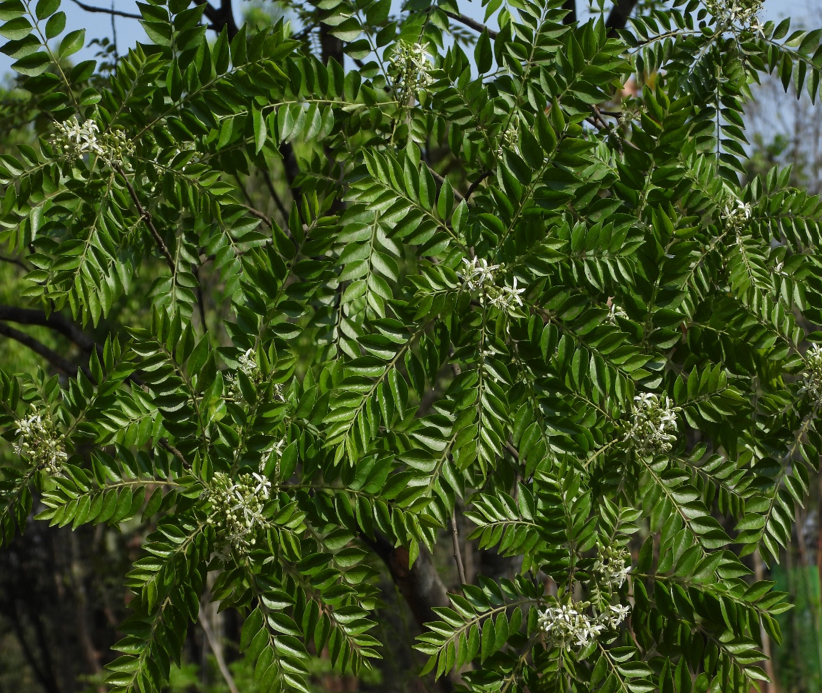
Figure 1: Leaves and flowers of B. koenigii
Methodology
The present study combines field surveys and lab experiments on B. koenigii. The field surveys carried out in Nadaun, Himachal Pradesh and Cuttack, Odisha during 2025-2026, where authors identified plant specimens with the help of the regional flora book (Saxena and Brahmam, 1994). Additionally, authors conducted experimental assay to confirm the presence of phytoconstituents and evaluate the antioxidant activity of B. koenigii leaves using the DPPH radical scavenging assay.
Antioxidant DPPH assay
B. koenigii leaves were collected from nearby Mahanadi areas of Cuttack District, Odisha, India (Figure 2). The leaves were thoroughly washed with distilled water and macerated with different solvents like n-hexane, ethanol and distilled water separately. The DPPH radical scavenging assay was used to evaluate the filtered extract following Dintu et al., (2026) with minor modifications. 1 ml of 0.1 mM DPPH solution prepared in methanol was added to prepared concentrations of aqueous, ethanolic and n-hexane extracts (1.0, 0.5, 0.25 and 0.125 mg/mL) using the respective solvents adjusting the final volume to 2 ml. 1 mL 0.1 mM DPPH in 1 mL methanol was used as control. Sample blanks (without DPPH) were used for background correction of absorbance. Reaction mixtures were exposed to dark incubation at room temperature for 20 minutes and the absorbance was spectrophotometrically taken at 517 nm. Percentage of radical scavenging activity was calculated using the following formula (Jena et al., 2025; Table 1).
% Inhibition= A0 – As /A0× 100
Where, A₀ is the absorbance of the control and Aₛ is the absorbance of the sample after blank correction
Results and discussion
The field survey revealed that curry leaves are common in study areas and used as spices. The present investigation also looked into the antioxidant potential of B. koenigii leaf extracts, using three different solvent systems: n-hexane, ethanolic and aqueous. Authors evaluated their effectiveness through free radical inhibition assays, testing concentrations ranging from 0.125 to 1.0 mg/ml. The findings, summarized in the result table (Table 1; Figure 2), clearly show that as the concentration of the extracts increased, so did their ability to inhibit free radicals, highlighting a concentration-dependent relationship. At the lowest concentration of 0.125 mg/ml, the ethanolic extract stood out with the highest inhibition rate of 79.09%, followed closely by the aqueous extract at 70.18% and the n-hexane extract at 69.23%. This pattern continued at higher concentrations, with the ethanolic extract consistently outperforming the other two. At 0.25 mg/ml, the inhibition rates rose to 83.51% for the ethanolic extract, 78.17% for the aqueous extract, and 71.42% for the n-hexane extract. A similar trend was noted at 0.5 mg/ml, where the ethanolic extract achieved an impressive 89.34% inhibition, while the aqueous and n-hexane extracts followed with 83.29% and 73.69%, respectively.
Table 1: Antioxidant potential of B. koenigii leaf extracts
Concentration | Inhibition (%) | ||
n-Hexane | Ethanolic | Aqueous | |
0.125 | 69.23 | 79.09 | 70.18 |
0.25 | 71.42 | 83.51 | 78.17 |
0.5 | 73.69 | 89.34 | 83.29 |
1.0 | 78.55 | 97.84 | 90.26 |
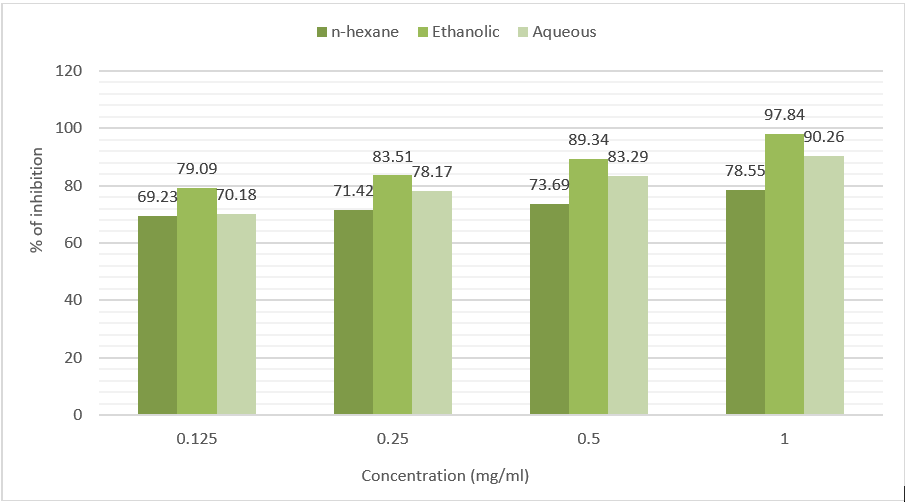
Figure 2: Antioxidant activity of B. koenigii leaf extracts
The highest antioxidant activity was observed at a concentration of 1.0 mg/ml, where the ethanolic extract achieved an impressive 97.84 % inhibition, coming very close to completely scavenging free radicals. The aqueous extract wasn’t far behind, showing a solid 90.26 % inhibition, while the n-hexane extract lagged a bit with a lower activity of 78.55 %. The ethanolic extract consistently outperformed the others at all concentrations, which can be linked to its intermediate polarity. This property allows it to effectively extract a wide range of phenolic compounds, flavonoids and other bioactive antioxidants found in curry leaves. The aqueous extract, being polar as well, demonstrated significant antioxidant activity, likely due to the presence of water-soluble phenolics and glycosides. On the other hand, the n-hexane extract, which is non-polar, showed relatively lower antioxidant potential since it mainly extracts lipophilic compounds that might not be as effective in scavenging free radicals. These results align with previous studies that highlight the importance of solvent polarity in the extraction efficiency of antioxidant compounds from plant materials. The strong link between increasing concentration and percentage inhibition further emphasizes the dose-dependent nature of the antioxidant activity seen in B. koenigii leaves. All in all, these findings clearly position curry leaves, especially their ethanolic extract, as a rich and powerful source of natural antioxidants, highlights their potential use in functional foods, nutraceuticals and pharmaceutical products aimed at tackling oxidative stress-related issues and enhancing overall human health.
Conclusion
The present study highlights nutraceutical potentials of B. koenigii leaves. The ethanolic leaves extract stands out, achieving a remarkable 97.84% inhibition at a concentration of 1.0 mg/ml, while the aqueous and n-hexane extracts follow closely behind. This reinforces the idea that curry leaves are a powerful natural source of antioxidants, opening up exciting possibilities for their use in functional foods and nutraceuticals. To build on these findings, future research should focus on phytochemical profiling using techniques like HPLC (High-Performance Liquid Chromatography) and GC-MS (Gas Chromatography-Mass Spectrometry), along with in vivo studies and clinical trials, to ensure their safe integration into healthcare and the food industry.
References
Abeysinghe DT, Alwis DDDH, Kumara KAH and Chandrika UG. (2021). Nutritive importance and therapeutics uses of three different varieties (Murraya koenigii, Micromelum minutum, and Clausena indica) of curry leaves: an updated review. Evidence-Based Complementary Alternative Medicine. 2021: 5523252. DOI: 10.1155/2021/5523252
Balakrishnan R, Vijayraja D, Jo SH, Ganesan P, Su-Kim I and Choi DK. (2020). Medicinal Profile, phytochemistry, and pharmacological activities of Murraya koenigii and its primary bioactive compounds. Antioxidants. 9(2): 101. DOI: 10.3390/antiox9020101
Chandimali N, Bak SG, Park EH, Lim HJ, Won YS, Kim EK, Park SI and Lee SJ. (2025). Free radicals and their impact on health and antioxidant defenses: a review. Cell Death Discovery. 11(1): 19. DOI: 10.1038/s41420-024-02278-8
Dintu KP, Sharma BP, Singh G, Sahu BK, Sunita K, Jena N and Khanduri A. (2026). Assessment of radical scavenging capacity in Aegle marmelos (L.) Correa fruits using DPPH assays. Journal of Biodiversity and Conservation. 10(2): 130-136.
Jachak SM, Thakur MS, Ahirrao P, and Goyal A. (2024). Murraya koenigii (L.) Spreng. as a natural intervention for diabesity: a review. Current Pharmaceutical Design. 30(41): 3255–3275.
Jena N, Vimala, Singh B, Patra A, Sharma BP, Hossain E and Kumar S. (2025). Methods for ethnobotanical data collection, phytochemistry, antioxidant, anthelmintic and antimicrobial activities for pharmacological evaluation of medicinal plants. Journal of Biodiversity and Conservation. 9(2): 87-107.
Khanka S, Agarwal H, Dubey S, Devi R and Chandra G. (2025). Exploring the pharmacotherapeutic significance of curry leaves. International Journal of Pharmacognosy and Pharmaceutical Research. 7(2): 36-44.
Saxena Ho and Brahmam M. (1994). The Flora of Orissa, Volume 1. Regional Research Laboratory, Bhubaneswar and Orissa Forest Development Corporation Limited, Bhubaneswar, Odisha, India.
Shivakumar VS, Johnson G and Zimmer EA. (2019). Transcriptome analysis of the curry tree (Bergera koenigii L., Rutaceae) during leaf development. Scientific Reports. 9(1): 4230. DOI: 10.1038/s41598-019-40227-z

Dedicated to advancing biodiversity conservation and the sustainable management of natural resources for current and future generations.
Copyright © 2026 Journal of Biodiversity And Conservation || Designed By Antler’s Solution