
J. Biodivers. Conservation 10(2): 241-252
2026
ISSN: 2457-0761 (online)
Debangshu Agrahari1, Smitaa Basole2 and Kadambini Das3*
1Department of Dravyaguna Vijnana, Jeevak Ayurved Medical College and Hospital Research Centre, Chandauli, Uttar Pradesh, India
2Department of Botany, Balbhim College, Beed, Maharashtra, India
3University Department of Botany, Babasaheb Bhimrao Ambedkar Bihar University, Muzaffarpur, Bihar, India
*Email-Id:das.kadambini88@gmail.com; ORCID: https://orcid.org/0000-0001-5343-1363
DOI: https://doi.org/10.5281/zenodo.21069050
Article Details: Received: 2026-05-22 | Accepted: 2026-06-28 | Available online: 2026-06-30
Licensed under a Creative Commons Attribution 4.0 International License
Abstract: Inflammation is a vital physiological response that protects the body against infection and tissue injury, but persistent inflammation contributes to the development of several chronic diseases, including arthritis, cardiovascular disorders, diabetes, neurodegenerative diseases and cancer. Although conventional anti-inflammatory drugs are effective, their prolonged use is often associated with adverse effects, which calls for the need for safer therapeutic alternatives. Euphorbiaceae is one of the largest families of flowering plants, rich in structurally diverse secondary metabolites with significant pharmacological potential. Numerous species have been traditionally used to treat inflammatory disorders and have been scientifically validated for their anti-inflammatory activities. Bioactive compounds such as flavonoids, phenolics, tannins, terpenoids, triterpenoids, alkaloids and certain fatty acids have been shown to suppress inflammatory mediators, modulate cytokine production and inhibit key signalling pathways involved in inflammation. Present review is based on a systematic collection and compilation of research data available on scientific databases, reviewed and presented in this paper. It summarizes the anti-inflammatory bioactives reported from selected Euphorbiaceae species, focusing on their common name, habit, phytochemistry and pharmacological activities. It also discusses the prospects of plants of this family as promising sources of natural anti-inflammatory agents.
Keywords: Anti-inflammation, bioactive compounds, Euphorbiaceae, natural products, traditional medicine
Introduction
The family Euphorbiaceae is one of the largest and most diverse families of flowering plants, comprising approximately 300 genera and over 7,500 species distributed across tropical, subtropical and temperate regions of the world (Kemboi et al., 2020). The species of this family have a remarkable morphological diversity, ranging from annual herbs and shrubs to large trees and succulents (Simpson, 2010). Several species are characterized by the presence of milky latex, specialized secretory tissues and an abundance of structurally diverse secondary metabolites that play an important role in plant defense against herbivores, pathogens and environmental stress (Simpson, 2010). The members of this family contribute to ecosystem functioning by stabilizing soil, supporting pollinators and providing food and shelter for numerous organisms (Shaaban et al., 2018). Many species are also cultivated as ornamentals, oilseed crops, timber resources and medicinal plants. They have also occupied an important place in traditional healthcare systems like Ayurveda, Siddha, Traditional Chinese Medicine and folk medicinal practices. Different plant parts such as leaves, bark, roots, seeds, fruits and latex have been used to treat a wide range of ailments, including wounds, skin infections, fever, gastrointestinal disorders, respiratory diseases and rheumatism (Amtaghri et al., 2022). Inflammation is one of the major underlying reasons and contributing factorsto all these disorders. In simple terms, Inflammation is a complex biological response initiated by the immune system to protect the body against infection, tissue injury and harmful stimuli (Chavda et al., 2024). Although acute inflammation is essential for tissue repair and host defense, persistent or uncontrolled inflammation contributes to the development of several chronic disorders, including arthritis, cardiovascular diseases, diabetes mellitus, inflammatory bowel disease, neurodegenerative disorders and certain types of cancer (Chen et al., 2017). Conventional anti-inflammatory drugs, particularly non-steroidal anti-inflammatory drugs (NSAIDs) and corticosteroids, are effective in controlling inflammation but are often associated with adverse effects such as gastrointestinal ulceration, renal impairment, hepatotoxicity and increased cardiovascular risk following prolonged use (Sohail et al., 2023). These limitations have stimulated the search for safer and more effective anti-inflammatory agents from natural sources. Plants in this scenario represent an important reservoir of bioactive secondary metabolites capable of modulating inflammatory pathways through multiple mechanisms (Mendoza-Calderón et al., 2026). Phytochemicals such as flavonoids, phenolic acids, tannins, terpenoids, alkaloids, steroids and triterpenoids exhibit anti-inflammatory activity by scavenging reactive oxygen species (ROS), suppressing pro-inflammatory cytokines, inhibiting cyclooxygenase (COX) and lipoxygenase (LOX) enzymes, regulating nitric oxide production and modulating signalling pathways including nuclear factor-kappa B (NF-κB) and mitogen-activated protein kinases (Gonfa et al., 2023). Due to their multi-target mode of action, these compounds have attracted considerable attention as potential alternatives to conventional anti-inflammatory therapies. Numerous members of the Euphorbiaceae (Plate 1) have been reported to contain bioactive molecules such as quercetin, kaempferol, rutin, rottlerin, bergenin, gallic acid, ellagic acid, ricinoleic acid, jatrophone and several diterpenoids, triterpenoids, sterols and phenolic compounds that have significant anti-inflammatory effects in both in vitro and in vivo studies (Félix-Silva et al., 2014). These compounds exert their activity by reducing oxidative stress, inhibiting inflammatory mediators including tumournecrosis factor-α (TNF-α), interleukins (IL-1β and IL-6), cyclooxygenase-2 (COX-2), inducible nitric oxide synthase (iNOS) and nitric oxide (NO) production, thereby limiting tissue damage and promoting the resolution of inflammation (García-Mediavilla et al., 2007).Although numerous pharmacological studies have reported the anti-inflammatory properties of individual Euphorbiaceae species, the available information remains dispersed across different plant species, phytochemical classes and experimental models. The present review compiles the information from accessible flora references and research data available from online scientific databases and clearly discusses the major anti-inflammatory bioactives reported from the selected members of the Euphorbiaceae family found in India, mentioning their common names, habit, bioactive compounds viable against inflammation, pharmacological evidence and potential applications in the development of safer plant-based anti-inflammatory therapeutics.
Methodology
The information presented in this review was gathered through an extensive search of published literature on the Euphorbiaceae family, with a primary focus on anti-inflammatory bioactive compounds and their pharmacological significance. Relevant publications were identified from electronic databases, including Google Scholar, Scopus, PubMed, Web of Science and Plants of the World Online (POWO). These sources were used to obtain updated taxonomic information, original research articles, review papers, ethnobotanical records and pharmacological reports. The literature search was carried out using combinations of the keywords ‘Euphorbiaceae’, ‘milky sap weed’, ‘inflammation’, ‘anti-inflammatory agents’, ‘oxidative stress’ and ‘ethnomedicine’. To broaden the scope of the review, information from regional floras, books and published reports describing species distribution and traditional medicinal applications was also examined. Only studies supported by reliable scientific evidence and authenticated ethnomedicinal information were considered. The collected data were carefully screened, compared and organized into appropriate thematic sections to provide a concise and systematic overview of the anti-inflammatory bioactive compounds reported from different species of the Euphorbiaceae family found in India (Kumar, 2025; Sahu et al., 2026).
Anti-inflammatory bioactive compounds from medicinal Euphorbiaceae species
The medicinal plants of the Euphorbiaceae family are a storehouse of pharmacologically important secondary metabolites (Islam et al., 2019), particularly flavonoids, phenolic compounds, tannins, triterpenoids and diterpenoids. Flavonoids are the most commonly reported class of bioactive compounds, occurring in almost all the listed species (Table 1). They are known to suppress inflammatory mediators by inhibiting pro-inflammatory cytokines, cyclooxygenase (COX) enzymes, nitric oxide production and oxidative stress (Ferraz et al., 2020).Well-studied species like Croton bonplandianus inhibit TNF-α, IL-6, COX enzymes and nitric oxide (NO) production (Yasin et al., 2021) and Homonoia riparia (Plate 1e) targets the COX-2 pathway. Plant species of a well-known genus of this family, Chrozophora, have shown potential in reducing carrageenan-induced paw edema, indicating their ability to suppress acute inflammatory responses (Khan et al., 2024). The anti-inflammatory activity of these plants is most likely due to the synergistic action of various phytochemicals present in them rather than a single bioactive compound. Many of these plants also possess significant antioxidant, cardioprotective, antihyperlipidemic and cytoprotective activities (Silva et al., 2025). Unique metabolites found in this family, such as rottlerin in Mallotus philippensis, ricinoleic acid in Ricinus communis and jatrophone in Jatropha gossypiifolia, point towards the chemical diversity of Euphorbiaceae (Table 1).
Table 1: Anti-inflammatory bioactives from plants of the Euphorbiaceae family
Plant species | Common name | Habit | Major anti-inflammatory bioactives | Reported pharmacological properties | Source(s) | ||||
Acalypha indica L. (Plate 1a) | Indian copperleaf (E) | Herb | Flavonoids, quercetin, kaempferol, phenolics | Cytokine suppression, antioxidant, cardioprotective, antihyperlipidemic | Sharma et al., (2025) | ||||
Baliospermum solanifolium (Burm.) Suresh | Red physic nut (E) | Subshrub or shrub | Sterols, triterpenoids, flavonoids, kaempferol glycosides | Antioxidant, lipid-lowering potential, protection of cells against peroxidative cellular toxicity and reduction of inflammatory cell infiltration | Pipatrattanaseree et al., (2019); Kuttappan et al., (2025) | ||||
Bridelia retusa (L.) A.Juss. | Spinous kino tree (E) | Shrub or tree | Gallic acid, ellagic acid, tannins, triterpenoids, flavonoids | Cardioprotective, antioxidant, reduction of tissue swellings and analgesic | Kumar and Jain, (2014); Tatiya et al., (2017) | ||||
Bridelia stipularis (L.) Blume | Climbing bridelia (E) | Scrambling shrub or tree | Tannins, flavonoids and triterpenoids | Antioxidant, anti-inflammatory | Acharyya et al., (2022) | ||||
Chrozophora rottleri (Geiseler) Spreng. (Plate 1d) | Indian chalk plant (E) | Sub shrub | Flavonoids, tannins, alkaloids | Anti-inflammatory (suppression of carrageenan-induced hind paw edema), antioxidant, antihyperlipidemic | Talluri et al., (2016) | ||||
Croton bonplandianus Baill. (Plate 1b) | Ban tulsi (H) | Shrub | Diterpenoids, flavonoids, phenolics | Antioxidant, anti-inflammatory [inhibition of pro-inflammatory cytokines such as (TNF-α and IL-6), cyclooxygenase (COX) enzymes and nitric oxide] | Yasin et al., (2021) | ||||
Euphorbia hirta L. (Plate 1c) | Asthma weed (E) | Herb | Quercetin, rutin, gallic acid, tannins, triterpenoids and sterols | Antihypertensive, antioxidant, vasorelaxant, mast cell stabilization and enzyme inhibition | Dwijayanti et al., (2024); Bai et al., (2025) | ||||
Homonoia riparia Lour. (Plate 1e) | Willow-leaved spurge (E) | Shrub or tree | Flavonoids, triterpenoids, polyphenols | Antioxidant, anti-inflammatory (targeting pro-inflammatory pathways such as COX-2) | Pyun et al., (2017) | ||||
Jatropha gossypiifolia L. | Bellyache bush (E) | Shrub | Flavonoids, terpenoids (jatrophone), tannins and phenolics | Antioxidant, antihyperlipidemic | Félix-Silva et al., (2014); Xavier-Santos et al., (2018) | ||||
Macaranga peltata (Roxb.) Müll.Arg. | Shield-leaf tree (E) | Tree | Flavonoids, phenolics, steroids and tannins | Antioxidant, anti-inflammatory potential (reduction of tissue inflammation and inhibition of inflammatory pathways) | Sree Lakshmi et al., (2025); Honnappa et al., (2025) | ||||
Mallotus philippensis (Lam.) Müll.Arg. | Kamala tree (H) | Shrub or tree | Polyphenol (rottlerin), flavonoids, chalcones | Antioxidant, hypolipidemic, reduction of inflammation by regulating inflammatory cytokines, cytoprotective | Bodas et al., (2022); Sultana et al., (2025) | ||||
Mallotus repandus (Rottler) Müll.Arg. | Triangular-leaf mallotus (E) | Scrambling shrub or tree | Phenolics, flavonoids, triterpenes, isocoumarin (Bergenin), tannins and saponins | Antioxidant (Mallorepine), anti-inflammatory (synergistic effects of key phytochemical classes) | Hasan et al., (2014); Kerdphon et al., (2025) | ||||
Ricinus communis L. | Castor oil plant (E) | Shrub or tree | Ricinoleic acid (fatty acid), flavonoids, tocopherols, alkaloids and phenolic acids | Inhibition of inflammatory mediators, scavenging free radicals and modulating cell signaling pathways | Abdul et al., (2018); Luzardo-Ocampo et al., (2022) | ||||
|
| Shrub or tree |
|
| Tewtrakul et al., (2011) |
(E: English; H: Hindi)
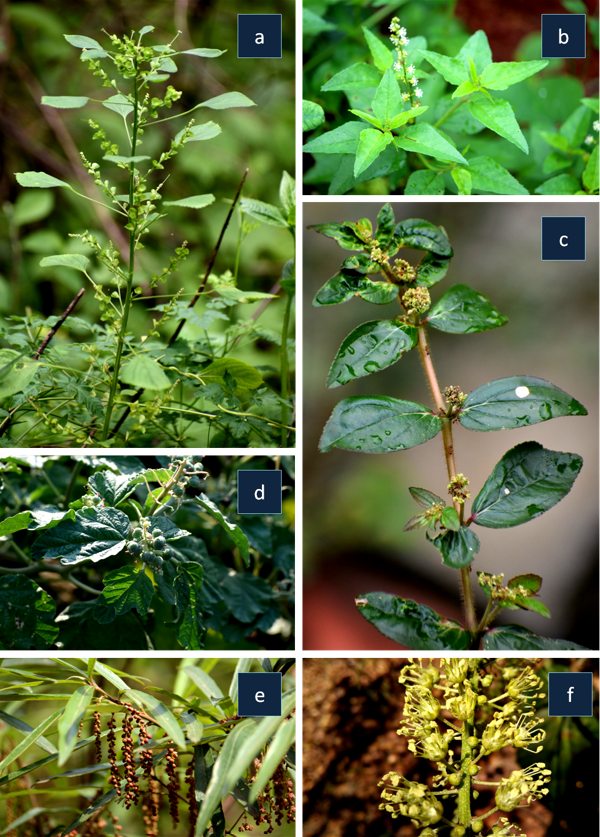
Plate 1: Some plant species of the Euphorbiaceae family (a) aerial plant parts of Acalypha indica, (b) flowers of Croton bonplandianus, (c) flowers of Euphorbia hirta, (d) fruits of Chrozophora rottleri, (e) fruits of Homonoia riparia and (f) flowers of Croton persimilis
Future aspects
The present review compiled the pharmacological aspect of the anti-inflammatory potential of the Euphorbiaceae species. However, the reported efficacy varies depending on factors such as plant part used, extraction solvent, phytochemical composition and experimental model. This variability highlights the need for standardized extraction procedures and bioassay protocols to facilitate comparison among studies. Isolation of active constituents, detailed mechanism-of-action studies, toxicity assessments and clinical validation are still lacking for many species. Addressing these limitations will be essential for translating the anti-inflammatory potential of Euphorbiaceae bioactives into safe and effective therapeutic agents.
Conclusion
Euphorbiaceae family is an important source of bioactive secondary metabolites with significant anti-inflammatory potential. Several species possess phytochemicals such as flavonoids, phenolics, tannins, terpenoids, triterpenoids and alkaloids that have shown the ability to modulate inflammatory mediators and signaling pathways. Traditional medicinal uses of these plants are increasingly supported by experimental evidence, highlighting their value as potential alternatives to synthetic anti-inflammatory drugs. Deeper study regarding their phytochemistry, extraction, as well as conservation, is still needed to translate research into plant-based products. Beyond that, Euphorbiaceae species represent a promising natural resource for the discovery and development of safer and more effective anti-inflammatory agents.
References
Abdul WM, Hajrah NH, Sabir JSM, Al-Garni SM, Sabir MJ, Kabli SA, Saini KS and Bora RS. (2018). Therapeutic role of Ricinus communis L. and its bioactive compounds in disease prevention and treatment. Asian Pacific Journal of Tropical Medicine. 11(3): 177-185.
Acharyya RN, Mitra K, Risha MAM, Hasan MF, Barman AK, Karmakar UK, Dev S and Das AK. (2022). Evaluation of toxicological, anti-allergic and neuropharmacological activities of Brideliastipularis: in-vivo and in-silico studies. Journal of Medicinal Plants Studies. 10(4): 113-123.
Amtaghri S, Akdad M, Slaoui M and Eddouks M. (2022). Traditional uses, pharmacological, and phytochemical studies of Euphorbia: a review. Current Topics in Medicinal Chemistry. 22(19): 1553-1570.
Bai X, Li L, Wu Y and Jie B. (2025). Flavonoids of Euphorbia hirta inhibit inflammatory mechanisms via Nrf2 and NF-κB pathways. Cell Biochemistry and Biophysics. 83(1): 1167-1183.
Bodas KS, Bagul CD and Shinde VM. (2022). Evaluation of wound healing effect of Mallotus philippensis (Lam.) Mull. Arg. by in silico multitargets directed for multiligand approach. In Silico Pharmacology. 10(1): 19. DOI: 10.1007/s40203-022-00134-0
Chavda VP, Feehan J and Apostolopoulos V. (2024). Inflammation: the cause of all diseases. Cells. 13(22): 1906. DOI: 10.3390/cells13221906
Chen L, Deng H, Cui H, Fang J, Zuo Z, Deng J, Li Y, Wang X and Zhao L. (2017). Inflammatory responses and inflammation-associated diseases in organs. Oncotarget. 9(6): 7204-7218.
Dwijayanti DR, Widyananda MH, Hermanto FE, Soewondo A, Afiyanti M and Widodo N. (2024). Revealing the anti-inflammatory activity of Euphorbia hirta extract: transcriptomic and nitric oxide production analysis in LPS-induced RAW 264.7 cells. Food and Agricultural Immunology. 35(1): 2351360. DOI: 10.1080/09540105.2024.2351360
Félix-Silva J, Giordani RB, da Silva Jr AA, Zucolotto SM and Fernandes-Pedrosa MF. (2014). Jatropha gossypiifolia L. (Euphorbiaceae): a review of traditional uses, phytochemistry, pharmacology, and toxicology of this medicinal plant. Evidence‐Based Complementary and Alternative Medicine. 2014: 369204. DOI: 10.1155/2014/369204
Ferraz CR, Carvalho TT, Manchope MF, Artero NA, Rasquel-Oliveira FS, Fattori V, Casagrande R and Verri Jr WA. (2020). Therapeutic potential of flavonoids in pain and inflammation: mechanisms of action, pre-clinical and clinical data and pharmaceutical development. Molecules. 25(3): 762. DOI: 10.3390/molecules25030762
García-Mediavilla V, Crespo I, Collado PS, Esteller A, Sánchez-Campos S, Tuñón MJ and González-Gallego J. (2007). The anti-inflammatory flavones quercetin and kaempferol cause inhibition of inducible nitric oxide synthase, cyclooxygenase-2 and reactive C-protein, and down-regulation of the nuclear factor kappa B pathway in Chang Liver cells. European Journal of Pharmacology. 557(2-3): 221-229.
Gonfa YH, Tessema FB, Bachheti A, Rai N, Tadesse MG, Singab AN, Chaubey KK and Bachheti RK. (2023). Anti-inflammatory activity of phytochemicals from medicinal plants and their nanoparticles: a review. Current Research in Biotechnology. 6: 100152. DOI: 10.1016/j.crbiot.2023.100152
Hasan MM, Uddin N, Hasan MR, Islam AFAM, Hossain MM, Rahman AB, Hossain MS, Chowdhury IA and Rana MS. (2014). Analgesic and anti‐inflammatory activities of leaf extract of Mallotus repandus (Willd.) Muell. Arg. BioMed Research International. 2014: 539807. DOI: 10.1155/2014/539807
Honnappa HN, Metikurki B, Devi VK and Saha S. (2025). Anti‐inflammatory activity and phytochemical analysis of Macaranga Peltata Boiv. Ex Baill. leaves and Pongamia pinnata (L.) Pierre. seeds. Journal of Pharmacy and Pharmacognosy Research. 13(2): 662-671.
Islam MS, Ara H, Ahmad KI and Uddin MM. (2019). A review on medicinal uses of different plants of Euphorbiaceae family. Universal Journal of Pharmaceutical Research. 4(1): 47-51.
Kemboi D, Peter X, Langat M and Tembu J. (2020). A review of the ethnomedicinal uses, biological activities, and triterpenoids of Euphorbia species. Molecules. 25(17): 4019. DOI: 10.3390/molecules25174019
Kerdphon S, Atawong P, Reanpang S, Changtor P, Khamto N, Yusakul G, Nuengchamnong N, Buddhachat K and Jongcharoenkamol J. (2025). Potential of Ko‐Klan traditional Thai remedy for evaluation of antioxidant and RT‐PCR anti‐inflammatory activities. Scientifica. 2025: 4361994. DOI: 10.1155/sci5/4361994
Khan MM, Ali SA, Qazi Y, Khan SW and Shaikh MA. (2024). Anti-inflammatory effects of Chrozophora plicata uncovered using network pharmacology and in-vivo carrageenan paw edema model. Heliyon. 10(3): e24617. DOI: 10.1016/j.heliyon.2024.e24617
Kumar S. (2025). Data collection from literature for biological sciences, medicinal plants research, ethnobotany and pharmacology: a methodological overview. Journal of Biodiversity and Conservation. 9(2): 167-169.
Kumar T and Jain V. (2014). Antinociceptive and anti‐inflammatory activities of Bridelia retusa methanolic fruit extract in experimental animals. The Scientific World Journal. 2014: 890151. DOI: 10.1155/2014/890151
Kuttappan RMV, Dennis S, Kandyil SP, Muthuswamy R and Raghavamenon AC. (2025). Protective effect of antioxidant triterpenes of Baliospermum solanifolium (burm.) suresh leaf extract against peroxidative cellular toxicity. Natural Product Research. 1-8. DOI: 10.1080/14786419.2025.2602910
Luzardo-Ocampo I, Vasco-Leal J, Cuellar-Nuñez ML, Quintero-Castaño V and Pérez-Serrano R. (2022). Castor bean (Ricinus communis L.) polyphenolic extracts exhibited anti-inflammatory effects on LPS-stimulated RAW 264.7 macrophages. Current Developments in Nutrition. 6: 309. DOI: 10.1093/cdn/nzac053.050
Mendoza-Calderón SA, Luis HIC, Mayoral LPC, Vásquez-Martínez IP, Pérez-Campos E, Salinas ILB, Ruiz-Rosado JD, Nájera-Segura NS, González EEJ, Ayala JEA, Flores CT, Rodríguez SP, Hernández-Huerta MT and Cabrera-Fuentes HA. (2026). Plant-derived secondary metabolites modulating inflammation-driven pathways in hepatocellular carcinoma: preclinical insights. Current Issues in Molecular Biology. 48(2): 172. DOI: 10.3390/cimb48020172
Pipatrattanaseree W, Itharat A, Mukkasombut N and Saesiw U. (2019). Potential in vitro anti-allergic, anti-inflammatory and cytotoxic activities of ethanolic extract of Baliospermum montanum root, its major components and a validated HPLC method. BMC Complementary and Alternative Medicine. 19(1): 45. DOI: 10.1186/s12906-019-2449-0
Pyun BJ, Kim YS, Lee IS and Kim JS. (2017). Homonoia riparia and its major component, myricitrin, inhibit high glucose-induced apoptosis of human retinal pericytes. Integrative Medicine Research. 6(3): 300-309.
Sahu JK, Sureshrao A, Majhi S, Dimri R, Sharma BP, Tailor V, Kumar S and Patra A. (2026). Methodology for writing review articles in biological sciences: a systematic and scholarly guide. Archives of Current Research International. 26(2): 170-182.
Shaaban M, Ali M, Tala MF, Hamed A and Hassan AZ. (2018). Ecological and phytochemical studies on Euphorbia retusa (Forssk.) from Egyptian habitat. Journal of Analytical Methods in Chemistry. 2018: 9143683. DOI: 10.1155/2018/9143683
Sharma D, Shrimal H, Singh K, Apparsundaram S and Dhobi M. (2025). Evaluation of the antiviral and anti-inflammatory activity of Acalypha indica L. in LPS-induced macrophages via modulating NF-κB Pathway. Phytomedicine Plus. 5(4): 100882. DOI: 10.1016/j.phyplu.2025.100882
Silva LMB, Oliveira RC, Formoso DD, Loureiro MB and Fernandez LG. (2025). Properties and medical applications of the Euphorbiaceae family and their bioproducts: a patent review. Naunyn-Schmiedeberg’s Archives of Pharmacology. 398(1): 147-163.
Simpson MG. (2010). Plant Systematics (Second Edition). Academic Press, Cambridge, Massachusetts, United States of America.
Sohail R, Mathew M, Patel KK, Reddy SA, Haider Z, Naria M, Habib A, Abdin ZU, Chaudhry WR and Akbar A. (2023). Effects of non-steroidal anti-inflammatory drugs (NSAIDs) and gastroprotective NSAIDs on the gastrointestinal tract: a narrative review. Cureus. 15(4): e37080. DOI: 10.7759/cureus.37080
Sree Lakshmi KP, Mansoor M, Jothi ET and Syamjith P. (2025). Macaranga species: phytochemicals, health benefits, and cosmetic potential. International Journal of Pharmaceutical Sciences. 3(3): 1614-1622.
Sultana N, Rahman MM, Mia MA, Rahman MS, Bhuyian MNI, Uddin N and Rashid MA. (2025). Exploring the multifaceted biological activities of Mallotus philippensis (Lam.) Muell. Arg., bark extracts. Next Research. 4: 101250. DOI: 10.1016/j.nexres.2025.101250
Talluri MR, Rao BG and Rao YV. (2016). Anti-inflammatory activity of Chrozophora rottleri extracts on carrageenan-induced rat paw edema. International Journal of Pharmacology, Phytochemistry and Ethnomedicine. 3: 20-26.
Tatiya AU, Saluja AK, Kalaskar MG, Surana SJ and Patil PH. (2017). Evaluation of analgesic and anti-inflammatory activity of Bridelia retusa (Spreng) bark. Journal of Traditional and Complementary Medicine. 7(4): 441-451.
Tewtrakul S, Subhadhirasakul S, Cheenpracha S, Yodsaoue O, Ponglimanont C and Karalai C. (2011). Anti-inflammatory principles of Suregada multiflora against nitric oxide and prostaglandin E2 releases. Journal of Ethnopharmacology. 133(1): 63-66.
Xavier-Santos JB, Félix-Silva J, Passos JGR, Gomes JAS, Fernandes JM, Garcia VB, de Araujo-Junior RF, Zucolotto SM, Silva-Junior AA and Fernandes-Pedrosa MF. (2018). Development of an effective and safe topical anti-inflammatory gel containing Jatropha gossypiifolia leaf extract: results from a pre-clinical trial in mice. Journal of Ethnopharmacology. 227: 268-278.
Yasin H, Mahmud S, Abrar H, Arsalan A, Jahan N, Fatima K, Bano R, Hussain RA and Islam M. (2021). Anti-inflammatory and histopathological studies of leaves extracts of Croton bonplandianus in Albino rats. Pakistan Journal of Pharmaceutical Sciences. 34(2(Supplementary)): 747-753.

Dedicated to advancing biodiversity conservation and the sustainable management of natural resources for current and future generations.
Copyright © 2026 Journal of Biodiversity And Conservation || Designed By Antler’s Solution