
J. Biodivers. Conservation 10(2): 212-222
2026
ISSN: 2457-0761 (online)
Ghodke Anita Sureshrao1 and Bhagwati Prashad Sharma2*
1Department of Dravyaguna Vigyan, Amaltas Institute of Ayurveda and Amaltas Ayurved Hospital and Research Center, Dewas, Madhya Pradesh, India
2Department of Botany, Sidharth Government College, Nadaun, Himachal Pradesh, India
Email-Id: bp76sharma@gmail.com; ORCID: https://orcid.org/0000-0002-8134-9807
DOI: https://doi.org/10.5281/zenodo.21051320
Article Details: Received: 2026-05-16 | Accepted: 2026-06-28 | Available online: 2026-06-30
Licensed under a Creative Commons Attribution 4.0 International License
Abstract: Cardiovascular diseases (CVDs) are one of the leading causes of mortality worldwide and constitute a major public health burden in India. The increasing prevalence of sedentary lifestyles, unhealthy dietary habits, hypertension, dyslipidemia, obesity and diabetes has contributed to the significant rise of coronary artery disease and related cardiovascular disorders. Although conventional therapies have improved disease management, the search for safer and more effective cardioprotective agents continues. Medicinal plants have emerged as valuable sources of bioactive compounds with therapeutic potential. Among them, members of the Apocynaceae family have a considerable reputation due to their rich phytochemical diversity and reported use in traditional medicine. The present review compiles and evaluates the literature on cardiovascular-protective phytoconstituents reported from selected Indian species of the family Apocynaceae, using scientific databases. Several phytoconstituents, such as lupeol, lupeol acetate, γ-tocopherol, phytosterol, thevetin, linoleic acid and campesterol, known for their antioxidant, anti-inflammatory, lipid-lowering and cardioprotective activities, have been reported in the plant species of this family. This review compiles their shared name, native range, specific cardioprotective bioactives and pharmacological significance, while emphasising the need for further experimental and clinical validation. The objective is to suggest that Apocynaceae species represent promising sources of lead molecules for the development of novel cardioprotective agents.
Keywords: Apocynaceae, cardioprotection, cardiovascular diseases, cardiac glycosides, phytoconstituents, antioxidants
Introduction
Cardiovascular diseases (CVDs) are a major group of non-communicable diseases affecting the heart and blood vessels (Lopez et al., 2023). It is a collective terminology used to describe a broad spectrum of disorders, including coronary artery disease (CAD), cerebrovascular disease (stroke), peripheral artery disease, rheumatic heart disease, congenital heart defects, deep vein thrombosis (DVT) and pulmonary embolism (PE) (Lopez et al., 2023;Loitongbam and Surin, 2024). India currently faces a significant cardiovascular health challenge, with marked regional variations in disease prevalence. States such as Kerala, Punjab and Tamil Nadu report some of the highest rates of CVDs, alongside increased prevalence of hypercholesterolemia and hypertension (Loitongbam and Surin, 2024). Rapid industrialization and urbanization have altered lifestyle patterns, leading to reduced physical activity, increased sedentary occupations, unhealthy dietary habits and a rising rate of metabolic disorders (Lopez et al., 2023). These factors have contributed to the growing burden of cardiovascular diseases, particularly among the youth populations. Furthermore, India bears one of the world’s highest burdens of acute coronary syndrome and ST wave-elevation myocardial infarction (Loitongbam and Surin, 2024). At the ground level, accurate estimation of cardiovascular mortality and morbidity remains difficult because of limited structured data collection systems and the high proportion of deaths occurring outside healthcare facilities without definitive determination of the cause (Loitongbam and Surin, 2024). Besides well-known risk factors such as hypertension, dyslipidemia, obesity and diabetes, other factors associated with CAD include elevated homocysteine levels, air pollution, temperature changes, psychosocial stress, mental health disorders and chronic inflammation indicated by increased high-sensitivity C-reactive protein (hsCRP) levels (Wang et al., 2023).Preventive strategies are therefore important in reducing cardiovascular risk which includes adoption of healthy dietary practices, maintenance of optimal body weight, regular physical activity and avoidance of tobacco use (Singh et al., 2017). However, there is increasing interest in the exploration of medicinal plants as complementary sources of cardioprotective agents owing to their diverse bioactive constituents and long history of traditional use. Plant-derived phytochemicals have played a pivotal role in modern drug discovery and continue to provide lead molecules for the development of novel therapeutic agents (Morariu-Briciu et al., 2026). Apocynaceae, commonly known as the dogbane family (Noradina et al., 2024), represents an important source of pharmacologically active compounds among medicinal plant families. The family comprises more than 4,600 species distributed across approximately 380 genera, including trees, shrubs, climbers and herbs (Maulana, 2025; POWO, 2026). In India, over 80 species belonging to about 30 genera have been reported (Sharma et al., 2025). One of the distinguishing characteristics of this family is the presence of milky latex, which is often toxic, but plant parts are also rich in biologically active secondary metabolites such as alkaloids, cardiac glycosides, flavonoids, tannins, terpenoids and sterols (Chan et al., 2016). Despite their toxicity, several species have been extensively utilized in traditional and folk medicine for the management of cardiovascular and other ailments (Bhadane et al., 2018). Phytochemical investigations of selected Apocynaceae species have revealed the presence of numerous compounds with potential cardioprotective properties. These compounds have been reviewed to be rich in antioxidant and lipid-modulating properties (Nagalakshmi and Murthy, 2015). Many of which have shown anti-inflammatory and cytotoxic activities (Islam and Lucky, 2019). Therefore, the present review aims to compile and critically assess the available literature on cardiovascular-protective phytoconstituents reported from selected Indian species of the Apocynaceae family. Through organizing existing phytochemical and pharmacological evidence into a comprehensive framework, the present review seeks to highlight promising bioactive compounds and identify potential lead molecules for the development of future cardioprotective therapeutics.
Methodology
The present review was conducted through a comprehensive assessment of available literature concerning the family Apocynaceae. Relevant information was collected from major scientific databases, including Google Scholar, Scopus, PubMed, Web of Science and Plants of the World Online (POWO), to obtain updated taxonomic information as well as peer-reviewed articles, review studies, ethnobotanical reports and pharmacological investigations. Specific search terms such as “Apocynaceae”, “dogbane plants”, “anti-oxidant compounds”, “cardioprotective bioactives”, “lipid modulating compounds”, “cardiovascular diseases” and “anti-inflammatory activity” were employed to identify particular studies. Furthermore, regional flora literatures, books and published reports documenting traditional medicinal knowledge and species distribution were also examined. Only studies providing authentic scientific evidence and validated ethnomedicinal information were considered for inclusion. The collected data were critically evaluated, synthesized and organized into relevant thematic sections to provide a coherent and systematic presentation of the findings (Kumar, 2025; Sahu et al., 2026).
Cardioprotective bioactive compounds in Apocynaceae
Traditionally the plants in Apocynaceae family have been used in the treatment of various ailments including malaria, skin related problems, gastrointestinal ailments, diabetes and cardiovascular disorders (Devi et al., 2017). Phytochemical investigations of selected Apocynaceae species have revealed the presence of numerous compounds with potential cardioprotective properties. These include lupeol and lupeol acetate, which exhibit anti-inflammatory and cardioprotective activities (Dalimunthe et al., 2024); quercetin and its glycosides, which possesses antioxidant and anti-inflammatory properties (Kosanam et al., 2024); γ-tocopherol, a potent antioxidant that mitigates oxidative stress (Es-Sai et al., 2025); linoleic acid, an essential fatty acid associated with cardiovascular health and campesterol, a phytosterol capable of reducing intestinal cholesterol absorption (Table 1). Alkaloids vincristine and vinblastine from Catharanthus roseus, a species within the Apocynaceae family, has played a significant role in cancer therapy (Mendonce et al., 2025). Such compounds may contribute to the cardiovascular benefits traditionally attributed to several members of the family.
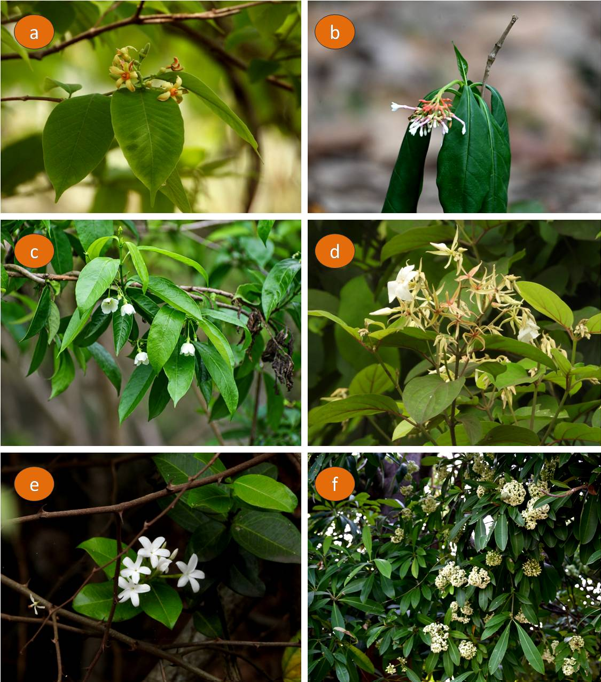
Plate 1: Plant species of Apocynaceae (a) Wrightia arborea, (b) Rauvolfia serpentina, (c) Vallaris solanacea, (d) Aganosma heynei, (e) Carissa carandas and (f) Alstonia scholaris
Table 1: Diversity of cardioprotective bioactive compounds found in selected members of Apocynaceae and their biological properties
Scientific name | Plant type | Common name | Native range | Cardiovascular bioactive compounds | Biological property / activity | Source(s) |
Aganosma heynei (Spreng.) I.M.Turner (Plate 1d) | Climber | Malati (H), Gandhamalati (O) | India | Quercetin and its glycosides (such as rutin, hyperin and iso-quercetin) | These flavonoids support cardiovascular health by reducing coronary heart disease mortality, improving endothelial function and exhibiting vasorelaxant properties. | Kosanam et al., (2024); Sharma et al., (2025) |
Alstonia scholaris (L.) R.Br. (Plate 1f) | Tree | Blackboard tree (E) | Tropical and subtropical Asia to North Australia | Echitamine, Picrinine, Scholaricine and Vallesamine | These indole alkaloids have anti-inflammatory and smooth muscle relaxant properties. | Channa et al., (2005) |
Carissa carandas L. (Plate 1e) | Shrub or small-tree | Bengal currant (E), Karonda (H) | India and Bangladesh | Unsaturated Fatty Acids (e.g., Linoleic and Oleic Acids) | Found abundantly in the seeds, these acids are known to lower LDL cholesterol and support overall heart health. | Al-Busaidi, (2025) |
Cascabela thevetia (L.) Lippold | Shrub or tree | Yellow oleander (E) | Mexico to South Tropical America | Thevetin A and Thevetin B | Thevetin A and Thevetin B are principal seed cardenolides that inhibit (Na+/K+) -ATPase, which is known to cause calcium overload and lethal arrhythmias. | Vázquez-Martínez et al., (2024) |
Catharanthus roseus (L.) G. Don | Sub-shrub or shrub | Madagascar periwinkle (E), Sadabahara (O) | East and South Madagascar | Ajmalicine (raubasine) and Serpentine | Used as vasodilators to treat circulatory disorders and high blood pressure. | Senbagalakshmi et al., (2017) |
Ichnocarpus frutescens (L.) W.T. Aiton | Climbing shrub | Black creeper (E) | Tropical and subtropical Asia to North Australia | α-Amyrin and Ursolic acid | Reduce inflammation and possess anti-hyperlipidemic properties | Singh and Singh, (2014) |
Nerium oleander L. | Shrub or tree | Rosebay (E) | Mediterranean to Myanmar | Oleandrin and Neriifolin | These cardiac glycosides are used in myocardial insufficiency therapy but the entire plant is considered lethal cardiac poison. | Gayathri et al., (2011); Ahmad, (2017); Ayouaz et al., (2023) |
Rauvolfia serpentina (L.) Benth. ex Kurz (Plate 1b) | Sub-shrub or shrub | Indian snakeroot (E) | India, South- Central China and Western Malesia | Ajmaline | It is considered as one of class I antiarrhythmic medication. | Shah et al., (2020); Dubey et al., (2026) |
Reserpine | Antihypertensive drug that acts by depleting norepinephrine stores in the peripheral nervous system. | |||||
Serpentine | Anti-fibrillatory and anti-hypertensive properties. | |||||
Vallaris solanacea (Roth ex Roem. & Schult.) Kuntze (Plate 1c) | Climber | Bread flower (E) | India to Indo-China and Hainan | O-acetyl-solanoside and Vallaroside | These cardiac glycosides are effective cardiac tonics. | Wong andChan, (2013); Agrawal et al., (2024); Sharma et al., (2025) |
Wrightia arborea (Dennst.) Mabb. (Plate 1a) | Tree | Woolly dyeing rosebay (E) | India, South China and Peninsular Malaysia | Lupeol | Anti-inflammatory or lipid modulating are present to mitigate arterial inflammation. | Nagalakshmi and Murthy, (2015) |
Campesterol | Antioxidant and hypocholesterolemic property. | |||||
γ-Tocopherol | Anti-oxidant and anti-inflammatory activity. |
(E-English; H-Hindi; O-Odia; LDL-Low Density Lipoprotein)
Future aspects
The growing burden of cardiovascular diseases and the limitations associated with current therapeutic options highlights the need for continued exploration of plant-derived cardioprotective agents. Future research on Indian Apocynaceae species should focus on the isolation, purification and structural characterization of bioactive phytoconstituents with demonstrated cardiovascular benefits. Advanced analytical techniques, metabolomic approaches and bioactivity-guided fractionation can facilitate the identification of novel lead compounds. The integration of computational approaches such as molecular docking, network pharmacology and artificial intelligence-based drug discovery may accelerate the identification of promising cardiovascular drug candidates. Additionally, well-designed clinical trials are needed to validate the therapeutic potential of these phytoconstituents in human populations. Such multidisciplinary efforts may ultimately contribute to the development of safe, effective and affordable plant-based cardioprotective drugs while supporting the conservation and sustainable utilization of India’s medicinal plant resources.
Conclusion
Cardiovascular diseases remain a major global health concern, creating a need for new and effective therapeutic agents. The Apocynaceae family is a rich source of bioactive phytochemicals and has long been used in traditional medicine for treating cardiovascular and other disorders. Several compounds identified from selected Apocynaceae species, including γ-tocopherol, lupeol, lupeol acetate, resperine, thevetin, squalene, phytol, campesterol and linoleic acid, have shown antioxidant, anti-inflammatory, lipid-lowering and cardioprotective activities. Cardiac glycosides from this family also play an important role in regulating cardiac function. Apocynaceae plants regarding this part represent a promising source of lead compounds for cardiovascular drug discovery. However, further phytochemical, pharmacological and clinical studies are needed to confirm their mechanisms of action, safety and therapeutic efficacy.
References
Agrawal M, Saxena AK and Agrawal SK. (2024). Vallaris solanacea induces mitochondrial mediated apoptosis in HL-60 human promyelocytic leukemia cells. Food and Chemical Toxicology. 189:114743. DOI: 10.1016/j.fct.2024.114743
Ahmad S. (2017). Effects of oleandrin on cardiovascular system. Research Journal of Pharmacology and Pharmacodynamics. 9(2): 97-98.
Al-Busaidi S. (2025). Phytochemical characterization and antioxidant potential of Karonda (Carissa carandas): unlocking a neglected fruit for nutraceutical chemistry. International Journal of Advanced Chemistry Research. 7(7): 51-56.
Ayouaz S, Arab R, Mouhoubi K and Madani K. (2023). Nerium oleander Lin: a review of chemical, pharmacological and traditional uses. Journal of Biomedical Research and Environmental Sciences. 4(4): 641-650.
Bhadane BS, Patil MP, Maheshwari VL and Patil RH. (2018). Ethnopharmacology, phytochemistry, and biotechnological advances of family Apocynaceae: a review. Phytotherapy Research. 32(7): 1181-1210.
Chan EWC, Wong SK and Chan HT. (2016). Apocynaceae species with antiproliferative and/or antiplasmodial properties: a review of ten genera. Journal of Integrative Medicine. 14(4): 269-284.
Channa S, Dar A, Ahmed S and Atta-ur-Rahman. (2005). Evaluation of Alstonia scholaris leaves for broncho-vasodilatory activity. Journal of Ethnopharmacology. 97(3): 469-476.
Dalimunthe A, Gunawan MC, Utari ZD, Dinata MR, Halim P, Pakpahan NES, Sitohang AI, Sukarno MA, Yuandani, Harahap Y, Setyowati EP, Park MN, Yusoff SD, Zainalabidin S, Prananda AT, Mahadi MK, Kim B, Harahap U and Syahputra RA. (2024). In-depth analysis of lupeol: delving into the diverse pharmacological profile. Frontiers in Pharmacology. 15:1461478. DOI: 10.3389/fphar.2024.1461478
Devi N, Gupta AK and Prajapati SK. (2017). Indian tribe’s and villager’s health and habits: popularity of Apocynaceae plants as medicine. International Journal of Green Pharmacy. 11(2): S256-S279.
Dubey A, Patel VK, Sahu VK, Dash SL and Mishra A. (2026). Rauwolfia serpentina: phytochemistry, mechanisms of action, and clinical implications – a comprehensive review. International Journal of Pharmacy Research and Technology. 16(1): 184-197.
Es-Sai B, Wahnou H, Benayad S, Rabbaa S, Laaziouez Y, El Kebbaj R, Limami Y and Duval RE. (2025). Gamma-tocopherol: a comprehensive review of its antioxidant, anti-inflammatory, and anticancer properties. Molecules. 30(3): 653. DOI: 10.3390/molecules30030653
Gayathri V, Ananthi S, ChandronithaC, Ramakrishnan G, Lakshmisundaram R and Vasanthi HR. (2011). Cardioprotective effect of Nerium oleander flower against isoproterenol-induced myocardial oxidative stress in experimental rats. Journal of Cardiovascular Pharmacology and Therapeutics. 16(1): 96-104.
Islam MS and Lucky RA. (2019). A study on different plants of Apocynaceae family and their medicinal uses. Universal Journal of Pharmaceutical Research. 4(1): 40-44.
Kosanam S and Pasupula R. (2024). Cardioprotective effects of cinnamoyl imidazole on apoptosis and oxidative stress in hypoxia/reoxygenation-induced H9C2 cell lines. Life Sciences. 359: 123189. DOI: 10.1016/j.lfs.2024.123189
Kumar S. (2025). Data collection from literature for biological sciences, medicinal plants research, ethnobotany and pharmacology: a methodological overview. Journal of Biodiversity and Conservation. 9(2): 167-169.
Loitongbam L and Surin WR. (2024). The rising burden of cardiovascular disease and thrombosis in India: an epidemiological review. Cureus. 16(11): e73786. DOI: 10.7759/cureus.73786
Lopez EO, Ballard BD and Jan A. (2023). Cardiovascular Disease. Stat Pearls Publishing, Treasure Island, Florida, United States.
Maulana AR. (2025). Apocynaceae plants: ethnobotany, phytochemistry, bioactivity and biotechnological advances – book review. Ethnobotany Research and Applications. 30: 1-3. Retrieved from https://ethnobotanyjournal.org/index.php/era/article/view/6878
Mendonce KC, Palani N, Rajadesingu S, Radhakrishnan K, Ayyar M and Priya LS. (2025). Pharmacological potential of bioactive compounds in Catharanthus roseus extract: a comprehensive review. Toxicology Reports. 14: 101998. DOI: 10.1016/j.toxrep.2025.101998
Morariu-Briciu DM, Jîjie AR, Bolintineanu SL, Pah AM, Chiriac SD, Chevereșan A, Dumitrașcu V, Bărbulescu CP and Jipa R. (2026). Medicinal plants and phytochemicals in cardioprotection-mechanistic pathways and translational roadmap. Life. 16(1): 175. DOI: 10.3390/life16010175
Nagalakshmi MAH and Murthy KSR. (2015). Phytochemical profile of crude seed oil of Wrightia tinctoria R. BR. and Wrightia arborea (DENNST.) MABB. by GC-MS. International Journal of Pharmaceutical Sciences Review and Research. 31(2): 46-51.
Noradina N, Ritonga IL, Herlina M, Hasibuan PAZ, Yuandani, Salim E and Tanjung R. (2024). Botany, phytochemistry, traditional uses, pharmacology of Apocynaceae family: a review. Community Practitioner. 21(7): 1857-1867.
POWO (2026). Plants of the World Online. Apocynaceae Juss. Facilitated by the Royal Botanic Gardens, Kew, United Kingdom. Published on the Internet: https://powo.science.kew.org/ Retrieved 22 June 2026.
Sahu JK, Sureshrao A, Majhi S, Dimri R, Sharma BP, Tailor V, Kumar S and Patra A. (2026). Methodology for writing review articles in biological sciences: a systematic and scholarly guide. Archives of Current Research International. 26(2): 170-182.
Senbagalakshmi P, Rao MV and Kumar TS. (2017). In vitro studies, biosynthesis of secondary metabolites and pharmacological utility of Catharanthus roseus (L.) G. Don.: a review. In: Naeem M, Aftab T and Khan M (Eds.). Catharanthus roseus. Springer, Cham, Switzerland. DOI: 10.1007/978-3-319-51620-2_8
Shah SMA, Naqvi SAR, Munir N, Zafar S, Akram M and Nisar J. (2020). Antihypertensive and antihyperlipidemic activity of aqueous methanolic extract of Rauwolfia serpentina in albino rats. Dose-Response. 18(3): 1559325820942077. DOI: 10.1177/1559325820942077
Sharma BP, Thakur S, Singh B and Mishra S. (2025). Medicinal Apocynaceae of India, Volume 1. Ambika Prasad Research Foundation, Odisha, India.
Singh NK and Singh VP. (2014). Anticancer activity of the roots of Ichnocarpus frutescens R. Br. and isolated triterpenes. Pakistan Journal of Pharmaceutical Sciences. 27(1): 187-191.
Singh SS, Paul SK, Pal R and Thatkar PV. (2017). Acute coronary syndrome-related mortality audit in a teaching hospital at Port Blair, India. Journal of Family Medicine and Primary Care. 6(3): 502-508.
Vázquez-Martínez J, Bravo-Villa P and Molina-Torres J. (2024). Thevetia thevetioides cardenolide and related cardiac glycoside profile in mature and immature seeds by High-Resolution Thin-Layer Chromatography (HPTLC) and Quadrupole Time of Flight–Tandem Mass Spectrometry (Q-TOF MS/MS) reveals insights of the cardenolide biosynthetic pathway. Molecules. 29(17): 4083. DOI: 10.3390/molecules29174083
Wang L, Lei J, Wang R and Li K. (2023). Non-traditional risk factors as contributors to cardiovascular disease. Reviews in Cardiovascular Medicine. 24(5): 134. DOI: 10.31083/j.rcm2405134
Wong SK and Chan EWC. (2013). Botany, uses, phytochemistry and pharmacology of Vallaris: a short review. Pharmacognosy Journal. 5: 242-246.

Dedicated to advancing biodiversity conservation and the sustainable management of natural resources for current and future generations.
Copyright © 2026 Journal of Biodiversity And Conservation || Designed By Antler’s Solution