
Journal of Biodiversity and Conservation 10(3): 82-89
2026
ISSN: 2457-0761 (online)
Sandhya Sharma1*, Rani Runam Kumari2, Pyaree Bandod1 and Ankita Sharma1
1Department of Botany, Government Arts and Commerce College, Rau, Indore, Madhya Pradesh, India
2Department of Botany, Bhupendra Narayan Mandal University, Madhepura, Bihar, India
*Email-Id: sandhyasharma83@gmail.com; ORCID: https://orcid.org/0009-0009-1374-511X
DOI: https://doi.org/10.5281/zenodo.22006003
Article Details: Received: 2026-07-01 | Accepted: 2026-08-09 | Available online: 2026-08-19
Licensed under a Creative Commons Attribution 4.0 International License
Abstract: Cissus quadrangularis L. (Vitaceae), commonly known as Hadjod or Asthisamhari, is an important plant with a long history of use in Indian traditional medicine. In Sanskrit texts, it is referred to as ‘Asthisamhari’, meaning associated with bone joining or healing. Present review was designed to study the nutritional profile, traditional and culinary uses of C. quadrangularis. It was done by compiling various datasets available on online databases, regional flora and published reports. The collected information was critically analysed and structurally presented in this review. Traditional knowledge from different communities demonstrated the diverse uses of this plant and its integration into food and healthcare practices. Alongside its medicinal applications, the plant has also been used as a food, particularly its young stems. Reported nutritional studies indicate that the stem contains appreciable amounts of carbohydrates, protein, dietary fibre, fat and minerals, highlighting its potential as a functional food ingredient. The available evidence suggests that C. quadrangularis represents an important link between traditional medicine, food, nutrition and cultural heritage. However, further research is required to establish nutrient bioavailability, effects of food processing, safety and clinical efficacy. This review highlights the potential of C. quadrangularis as a culturally significant medicinal and food plant and identifies opportunities for its future scientific and functional food applications.
Keywords: Asthisamhari, bone health, ethnobotany, functional food, nutritional value, traditional medicine
Introduction
Traditional food and medicinal systems are an important part of global cultural heritage (Ghosh et al., 2023). Across generations, indigenous communities have developed knowledge of locally available plants and their uses as food, medicine and household remedies (Wang et al., 2025). Many of them are traditionally used for both nutritional and medicinal purposes, called ‘nutraceuticals’ (Puri et al., 2022), providing essential dietary nutrients and disease-resistant therapeutic compounds. Documenting this knowledge is important for preserving cultural practices and understanding their possible relevance to modern nutrition and healthcare. In the current period, the need for effective healthcare has significantly increased with the rising incidence of accidents and injuries, which can lead to both acute and long-term health problems (Keeves et al., 2021). Bone and muscle-related injuries are particularly common following road accidents, falls, sports activities, occupational hazards and other forms of physical trauma (Gane et al., 2018). Although modern medicine has made significant advances in the diagnosis and treatment of such conditions, increasing interest in natural and plant-based alternatives has encouraged researchers to revisit traditional knowledge and the associated medicinal practices (Yuan et al., 2016). Plants used in traditional systems such as Ayurveda, Unani and Siddha have therefore gained renewed scientific interest for their potential role in managing various health conditions (Pandey et al., 2013), including bone-related problems. Among these plants, Cissus quadrangularis L., (Figure 1) is a perennial climber species belonging to the family Vitaceae (Bafna et al., 2021) and holds an important place in Indian traditional medicine. The species is indigenous to tropical regions, with a natural distribution extending across South Africa, Madagascar, the Arabian Peninsula, the Indian subcontinent and parts of Myanmar (Agnihotri et al., 2026). It is adaptable to hotter regions with severe dry conditions (Vinoth and Kumar, 2025). In India, it is commonly known as Hadjod or Asthisamhari. The traditional name ‘Asthisamhari’ is associated with the concept of bone joining or healing as, it has been used for generations for bone-related disorders and fracture management (Agnihotri et al., 2026). Beyond its medicinal importance, C. quadrangularis has also been used as a traditional food, with its stem incorporated into various culinary preparations (Prasad et al., 2018). Therefore, an effort has been made through this review to study this particular climber species for its medicinal and culinary uses and to link the traditional practices to its nutritional profile through literature review and which will highlight its potential as a functional food ingredient. This was accomplished by compiling and critically analysing data from online databases, regional floras and published reports. The findings were critically analysed, reviewed and are presented in a structural manner for easy understanding. The present review therefore, explores the cultural & traditional uses, culinary applications, nutritional value and longstanding role of C. quadrangularis in Indian traditional medicine, while highlighting its potential as a food and health-promoting plant.
Methodology
Relevant literature on Cissus quadrangularis L. was collected from scientific databases, including PubMed, Scopus, Web of Science, ScienceDirect and Google Scholar, using keywords such as “Cissus quadrangularis,” “Hadjod,” “Asthisamhari,” “ethnobotanical uses,” “nutritional composition,” “food applications” and “pharmacological activities.” Relevant research articles, reviews, ethnobotanical studies and traditional literature were selected. Regional flora, books and published reports documenting species distribution and traditional practices were also referred. Information on its traditional uses, plant parts, food applications, nutritional and mineral composition, phytochemicals & therapeutic properties was compiled, compared and organised into thematic sections and tables for a systematic presentation of the findings (Kumar et al., 2025; Sahu et al., 2026).
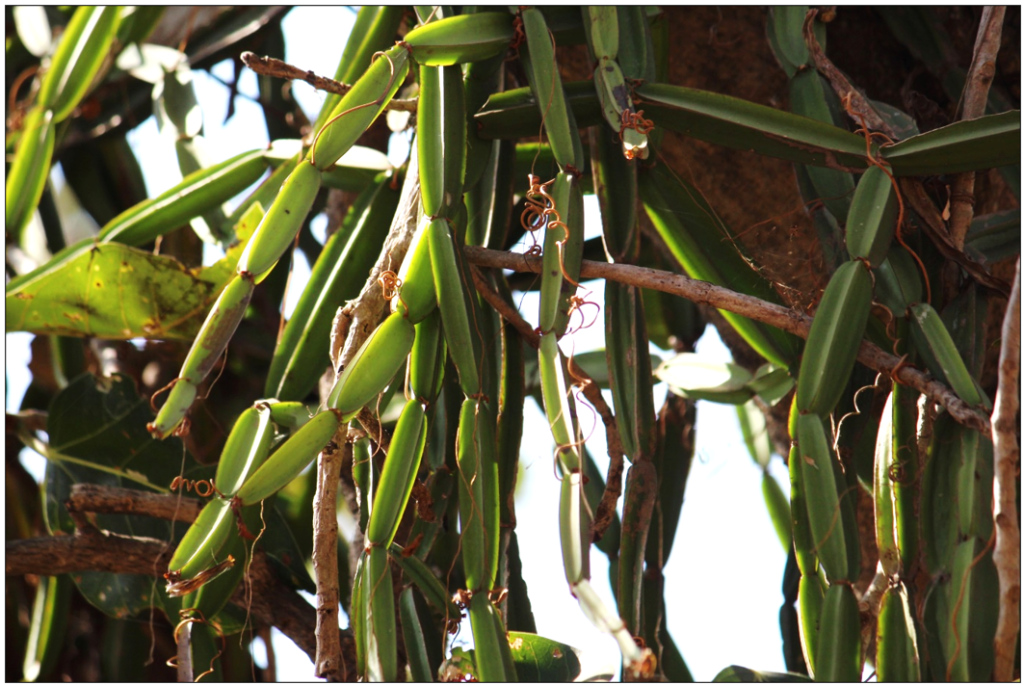
Figure 1: Quadrangular stems of Cissus quadrangularis showing distinct nodes, internodes and tendrils
Traditional medicinal practices
Granthimana-sthi-sanghari Vajrangi-chaasthi-shrinkhala ।
Asthisangharakah Prokto-vatshlesh-maharo-ashthiuk ॥
Ushnah Sarah Krimighna-shradurnamghno-akshirogjit ।
Ruksha-swadur-laghu-vrishyah Pachnah Pittalah Smiritah ॥
The verse characterises C. quadrangularis as a light, dry and astringent herb with a hot potency and digestive properties, traditionally indicated particularly for bone-related disorders and fracture healing. It is also described as Vāta-śleṣma-hara, krimighna and śūlaghna, indicating its traditional use in Vāta-Kapha disorders, intestinal worm infestations and pain-related conditions. The description of Asthisamhari/Asthisamharaka and Asthiśṛṅkhalā particularly highlights the plant’s association with bone health and skeletal repair. Its traditional applications reflect generations of indigenous knowledge passed down through communities. These practices also provide an important basis for understanding the plant’s potential medicinal and therapeutic value.
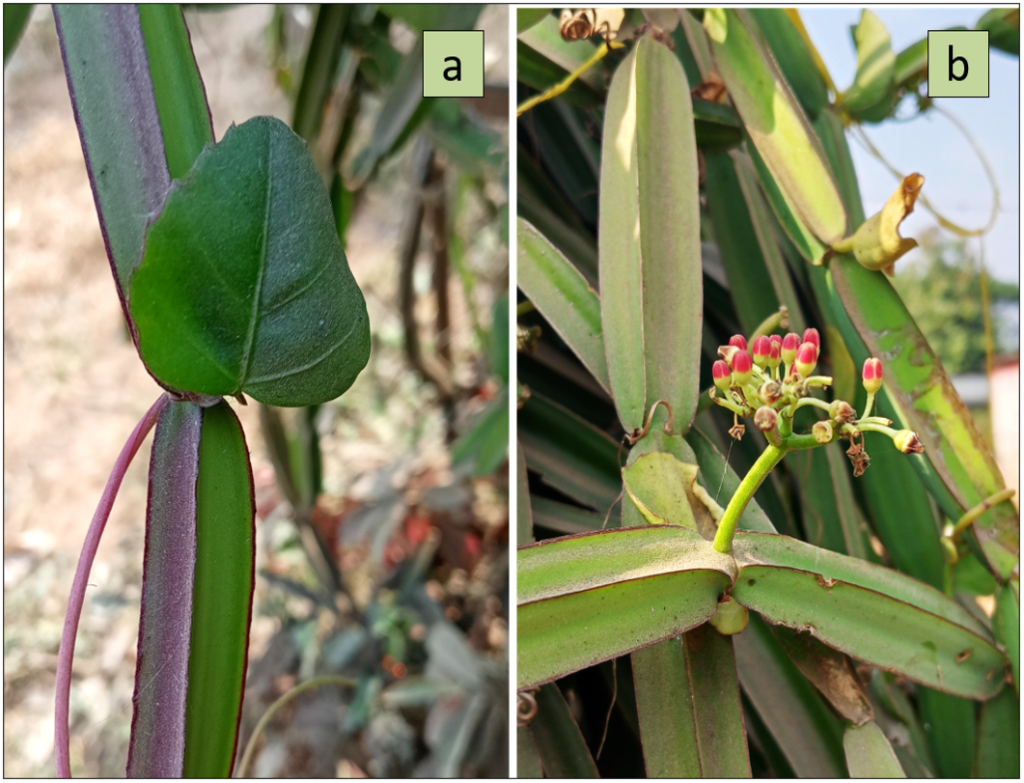
Figure 2: Plant parts of C. quadrangularis: a) leaf and b) flowers
Table 1: List of ethnomedicinal uses associated with different plant parts of C. quadrangularis
Plant parts | Medicinal use(s) | Source(s) |
Leaves | Tetanus | Prasad et al., (2018) |
Roots | Intestinal worms; rheumatic pain; chikungunya fever and joint pain; dysentery and bloody stool; epilepsy | |
In treatment of fractured bone | Sundaran et al., (2020) | |
Stem | Dental caries/gum swelling; headache and fever; bone fracture | Prasad et al., (2018) |
Diarrhoea | ||
Promoting lactation after childbirth | ||
In treatment of fractured bone | Sundaran et al., (2020) | |
Stem paste is boiled in limewater and given in asthma | ||
Scurvy, debilitating menstrual disorders, otorrhoea and epistaxis | ||
Treats acid reflux, gastritis, eye disorders, piles and anaemia. | ||
Whole plant | Fed to cattle to stimulate milk flow. | |
Haemorrhoids and certain bowel infections. | ||
Dental caries/gum swelling; joint pain | Prasad et al., (2018) |
Culinary aspects
Apart from its medicinal uses, C. quadrangularis has also been documented for its use as a traditional food. In particular, its young stems are used to make various dishes, such as chutney, dosa and various fried and snack items (Table 2).
Table 2: List of various culinary preparations of C. quadrangularis
Cuisine/ Food preparation | Locations | Sources |
Chutney | Pallipalem, East Godavari, Andhra Pradesh | Prasad et al., (2018) |
Dosa-like preparation | ||
Vada (fried snack) | Kakinada, East Godavari, Andhra Pradesh | |
Cooked with onion and turmeric | Kwazulu-natal, South Africa | Singh et al., (2025a) |
Bhajia mixture/chilli bite (Blended or cut into small pieces, added to the mixture and fried) |
Nutritional Value
Table 3: Nutritional composition and relevance of C. quadrangularis (Singh et al., 2025b)
Nutritional parameter | Content (per 100 g) | Nutritional relevance |
Carbohydrate | 40.9 ± 0.14 g | Major macronutrient and an important source of dietary energy |
Crude protein | 15.60± 0.10 g | Provides dietary protein required for tissue growth and repair, enzyme function, transport and other physiological functions |
Crude fibre | 11.4 ± 0.11 g | May contribute to dietary fibre intake and gastrointestinal health |
Fat | 9.2 ± 0.09 g | Contributes to dietary energy and supports various physiological functions |
Calcium | 32.29 ± 0.69 mg | Important for bone integrity, muscle contraction and other physiological functions associated with calcium uptake |
Magnesium | 1.38 ± 0.046 mg | Involved in muscle, nerve and metabolic functions |
Phosphorus | 0.26 ± 0.006 mg | Important for bone structure and cellular energy metabolism |
Future aspects
Conclusion
References
Agnihotri AK, Katre S, Sharma SK, Murkute AA and Sikarwar RL. (2026). Therapeutic potential of Cissus quadrangularis L.: an evidence-based review of ayurvedic claims. Indian Journal of Natural Products and Resources.17(1): 51-64.
Bafna PS, Patil PH, Maru SK and Mutha RE. (2021). Cissus quadrangularis L: a comprehensive multidisciplinary review. Journal of Ethnopharmacology. 279: 114355. DOI: 10.1016/j.jep.2021.114355
Gane EM, Brakenridge CL, Smits EJ and Johnston V. (2018). The impact of musculoskeletal injuries sustained in road traffic crashes on work-related outcomes: a protocol for a systematic review. Systematic Reviews. 7(1): 202. https://doi.org/10.1186/s13643-018-0869-4
Ghosh S, Meyer-Rochow VB and Jung C. (2023). Embracing tradition: the vital role of traditional foods in achieving nutrition security. Foods. 12(23): 4220. https://doi.org/10.3390/foods12234220
Keeves J, Braaf SC, Ekegren CL, Beck B and Gabbe BJ. (2021). Access to healthcare following serious injury: perspectives of allied health professionals in urban and regional settings. International Journal of Environmental Research and Public Health. 18(3): 1230. https://doi.org/10.3390/ijerph18031230
Kumar S. (2025). Data collection from literature for biological sciences, medicinal plants research, ethnobotany and pharmacology: a methodological overview. Journal of Biodiversity and Conservation. 9(2): 167-169.
Pandey MM, Rastogi S and Rawat AK. (2013). Indian traditional ayurvedic system of medicine and nutritional supplementation. Evidence‐Based Complementary and Alternative Medicine. 2013(1): 376327. https://doi.org/10.1155/2013/376327
Prasad GP, Pratap GP, Meenakshi V, Pal PK and Srikanth N. (2018). Ethnomedicinal and dietary uses of Cissus quadrangularis L. (Asthishrinkhala) from the tribes, rural people and traditional healers of Andhra Pradesh, India. Journal of Drug Research in Ayurvedic Sciences. 3(2): 96-105.
Puri V, Nagpal M, Singh I, Singh M, Dhingra GA, Huanbutta K, Dheer D, Sharma A and Sangnim T. (2022). A comprehensive review on nutraceuticals: therapy support and formulation challenges. Nutrients. 14(21): 4637. https://doi.org/10.3390/nu14214637
Sahu JK, Sureshrao A, Majhi S, Dimri R, Sharma BP, Tailor V, Kumar S and Patra A. (2026). Methodology for writing review articles in biological sciences: a systematic and scholarly guide. Archives of Current Research International. 26(2): 170-182.
Singh K, Meena S, Lakhawat S, Rai M and Babel R. (2025b). Formulation of Cisuss quadrangularis (Cissus quadrangularis) stem powder and its nutritional and phytochemical analysis. International Journal of Advanced Biochemistry Research. 9(7): 1444-1446.
Singh V, Pal I, Naicker A and Palmer K. (2025a). Indigenous knowledge and perceptions of Cissus quadrangularis among the elderly in Kwazulu-Natal, South Africa. INDILINGA: African Journal of Indigenous Knowledge Systems. 24(1): 43-56.
Sundaran J, Vasanthi M, Kamalapathy M, Bupesh G and Sahoo U. (2020). A short review on pharmacological activity of Cissus quadrangularis. Bioinformation. 16(8): 579. https://doi.org/10.6026/97320630016579
Vinoth K and Kumar SR. (2025). Morphological, molecular, and pharmacological review of veldt grape (Cissus quadrangularis L.): an underutilized medicinal plant. Frontiers in Plant Science. 16: 1586624. https://doi.org/10.3389/fpls.2025.158662
Wang X, Anwar T, Qureshi H, El-Beltagi HS, Sehar Z, Solieva D, Azizov B, Rebouh NY, Abbasov MA, Yakubov F and Alomran MM. (2025). Plant-based traditional remedies and their role in public health: ethnomedicinal perspectives for a growing population. Journal of Health, Population and Nutrition. 44(1): 300. https://doi.org/10.1186/s41043-025-01036-5
Yuan H, Ma Q, Ye L and Piao G. (2016). The traditional medicine and modern medicine from natural products. Molecules. 21(5): 559. https://doi.org/10.3390/molecules21050559

Dedicated to advancing biodiversity conservation and the sustainable management of natural resources for current and future generations.
Copyright © 2026 Journal of Biodiversity And Conservation || Designed By Antler’s Solution