
Journal of Biodiversity and Conservation 10(3): 97-105
2026
ISSN: 2457-0761 (online)
Manjula S
Department of Botany, Government First Grade College, Channapatna, Bangalore University, Bengaluru, Karnataka, India
Email-id: manjularaj1983@gmail.com; ORCID: https://orcid.org/0009-0004-0739-402X
DOI: https://doi.org/10.5281/zenodo.22179044
Article Details: Received: 2026-08-17 | Accepted: 2026-08-29 | Available online: 2026-08-31
Licensed under a Creative Commons Attribution 4.0 International License
Abstract: Moringa oleifera Lam. (Moringaceae), commonly known as the drumstick tree, is a multipurpose plant widely valued for its nutritional, ethnomedicinal and pharmacological properties. The present review summarizes available evidence on the food value, traditional medicinal uses and pharmacological potential of different plant parts of M. oleifera. The leaves, fruits, flowers and immature pods are consumed as food and provide important nutrients, including proteins, dietary fibres, minerals and vitamins. The leaves are particularly rich in protein, calcium, potassium, phosphorus and vitamin C, highlighting their potential contribution to nutritional security and the prevention of nutrient deficiencies. Ethnomedicinal evidence documented in classical Ayurvedic literature indicates the use of different plant parts for conditions such as intestinal worms, headache, deafness, sleep disturbances and conjunctivitis. Pharmacological investigations further demonstrate antioxidant, anti-inflammatory, antidiabetic, cardiovascular, immunomodulatory and neuroprotective activities associated with various parts and extracts of the plant. These diverse properties are attributed to its rich phytochemical composition, including phenolic compounds, flavonoids, sterols, vitamins and other bioactive constituents. M. oleifera represents an important food and medicinal resource with considerable potential for functional foods, traditional healthcare and pharmaceutical research. However, further well-designed clinical studies and standardized investigations are required to establish its therapeutic efficacy, dosage, safety and mechanisms of action.
Keywords: Ethnomedicine, Moringa, nutritional value, pharmacological activities
Introduction
Moringa oleifera Lam., (Moringaceae), commonly known as the drumstick tree or moringa, is a fast-growing, multipurpose plant widely distributed in tropical and subtropical regions (Pareek et al., 2023; Figure 1). It is valued for its adaptability to diverse environmental conditions and for the extensive use of its leaves, fruits, flowers, immature pods, seeds, bark and roots (Islam et al., 2021). The plant has gained considerable attention as a source of food, traditional medicine and bioactive compounds. Its leaves are particularly important because they contain appreciable amounts of protein, dietary fibre, minerals and vitamins, while the fruits, flowers and immature pods are also consumed in several traditional food systems (Milla et al., 2021).
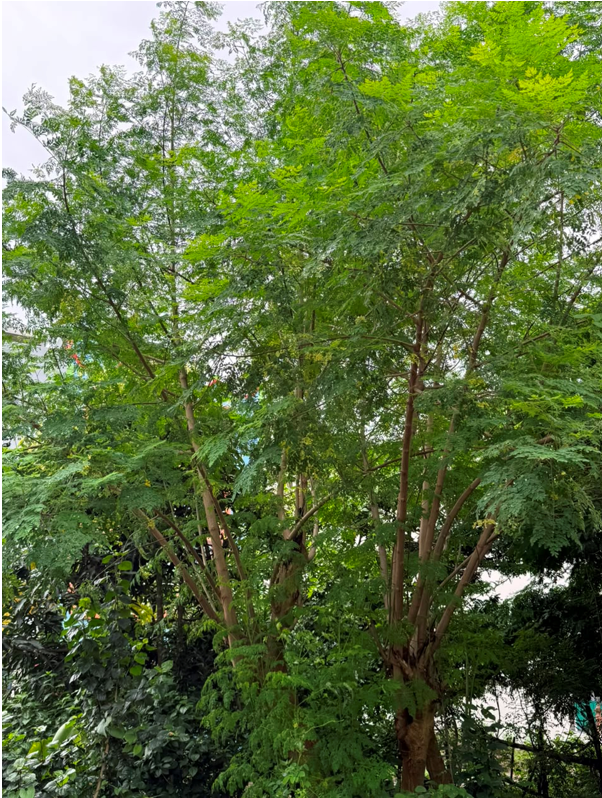
Figure 1: Whole tree of M. oleifera
The nutritional richness of M. oleifera has therefore contributed to its recognition as a potentially important plant for improving dietary quality and addressing micronutrient deficiencies (Peñalver et al., 2022). The medicinal importance of M. oleifera is deeply rooted in traditional healthcare systems, particularly in Ayurveda and other indigenous medical practices (Meireles et al., 2020). Classical Ayurvedic texts have documented the therapeutic use of different parts of the plant for a range of ailments, including intestinal worms, headache, sleep disturbances, deafness and conjunctivitis (Paikra et al., 2017). Traditional applications have subsequently stimulated scientific investigations into the phytochemical composition and biological activities of the species. Studies have reported the presence of diverse bioactive constituents, including phenolics, flavonoids, sterols, vitamins and other secondary metabolites, which may contribute to its antioxidant, anti inflammatory, antidiabetic and other health promoting properties (Panova et al., 2025). In recent years, increasing scientific interest in M. oleifera has led researchers to focus on validating its traditional uses and exploring its potential in functional foods, nutraceuticals and pharmaceutical applications (Sianipar et al., 2026).
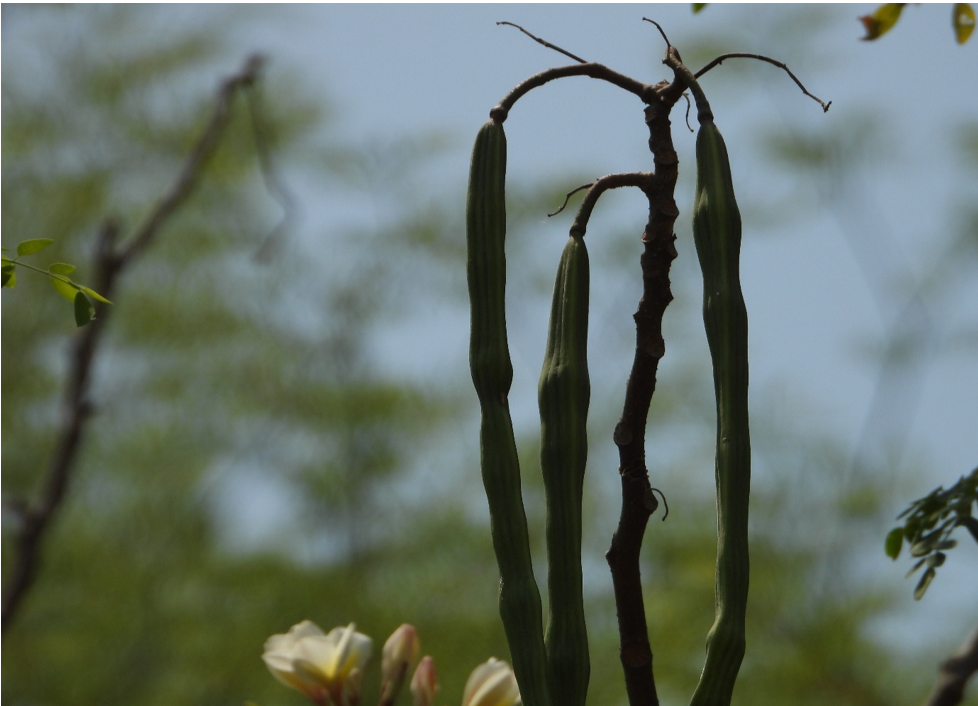
Figure 2: Fruits of M. oleifera
Experimental studies have reported antioxidant, cardiovascular, immunomodulatory, neuroprotective and antidiabetic effects from different plant parts and extracts (El-Sherbiny et al., 2024). Despite the considerable amount of published information, evidence remains distributed across nutritional, ethnomedicinal and pharmacological studies and differences in plant parts, extraction methods and experimental models make direct comparison difficult. Therefore, the present review brings together available evidence on the food, ethnomedicinal and pharmacological importance of M. oleifera, highlighting its nutritional significance, traditional therapeutic applications and experimentally reported biological activities, while identifying the need for further standardized and clinically relevant investigations.
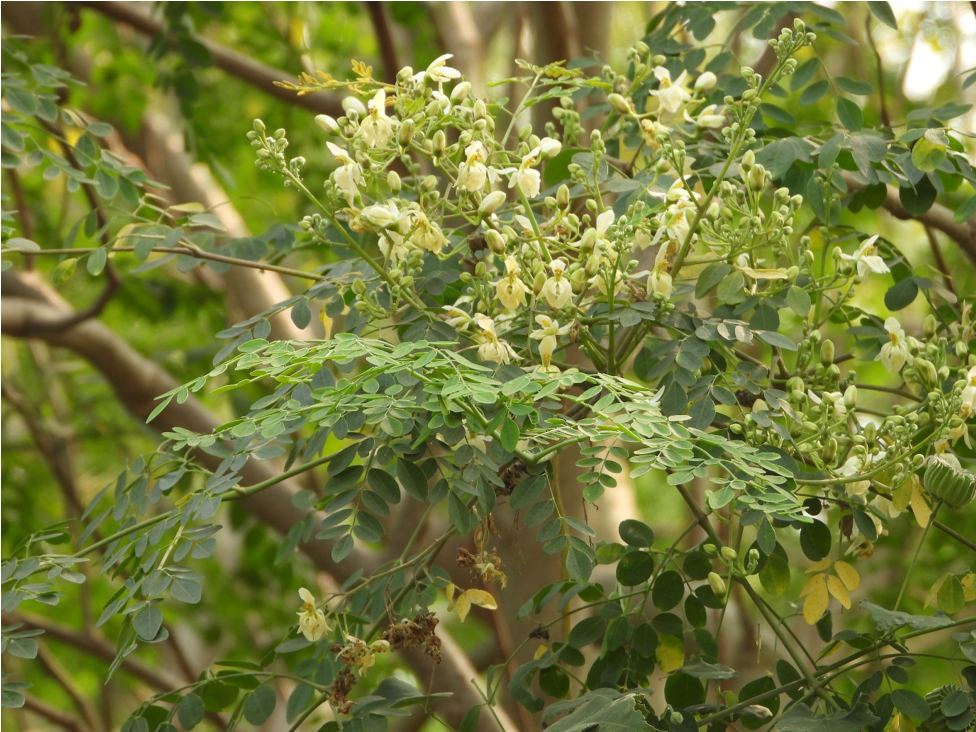
Figure 3: Flowers and leaves of Moringa oleifera
Food values
Moringa oleifera is an important food plant because several parts, particularly the leaves, fruits, flowers and immature pods, are traditionally consumed in tropical and subtropical regions (Table 1; Figures 2 & 3). The leaves are nutritionally rich and contain considerable amounts of protein, fibre, minerals and vitamins. Sultana, (2020) reported that M. oleifera leaves contain approximately 22.99-29.36% protein, 4.03-9.51% fat, 6.00-9.60% fibre and 8.05-10.38% ash. Fresh leaves are also a rich source of vitamin C, with reported values of 187.96-278.50 mg/100 g, while calcium, phosphorus and potassium occur in appreciable quantities. These nutritional characteristics make the leaves a valuable dietary resource, particularly in regions where access to nutrient-rich foods may be limited. The nutritional and antioxidant properties of M. oleifera leaves further support their potential use in functional foods and dietary supplements (Peñalver et al., 2022; Sultana, 2020). The food value of M. oleifera extends beyond its leaves. The fruits, flowers and immature pods are edible and form part of traditional diets in many tropical and subtropical countries (Islam et al., 2021). Regular incorporation of these plant parts into diets can provide essential nutrients and contribute to dietary diversity. Bibi et al., (2024) highlighted the nutritional importance of M. oleifera and its potential role in addressing nutritional deficiencies, particularly among populations with limited access to diverse food sources. Thus, M. oleifera can be regarded as a multipurpose food plant with considerable potential for nutritional security, functional food development and improvement of diet quality.
Table 1: Food, ethnomedicinal and pharmacological values of different plant parts of M. oleifera
Plant parts | Significance | Source |
Food values | ||
Leaves | Leaves are rich in protein content, ranging from (22.99-29.36%), and low in fat, from (4.03-9.51%), fibre, from (6.00-9.60%) and ash, from (8.05-10.38%). The vitamin C content of fresh M. oleifera leaves ranged from (187.96-278.50 mg/100 g), Ca ranged from (1.322-2.645%), P ranged from (0.152-0.304 g/100 g), and K ranged from (1.317-2.025 g/100 g). | Sultana, (2020) |
Leaves | It has nutritional value. | Peñalver et al., (2022) |
Leaves, fruits, flowers and immature pods. | The leaves, fruits, flowers, and immature pods of this tree are edible, and they form a part of traditional diets in many countries of the tropics and subtropics. | Islam et al., (2021) |
Leaves, fruits, flowers and immature pods. | It is an excellent source of essential nutrients and has been found to have a significant impact on improving nutritional deficiencies in populations with limited access to food. | Bibi et al., (2024) |
Ethnomedicinal uses | ||
Whole plant parts | As per Charaka Samhita, it is used for the treatment of worms and headache. | Tripathi, (1994) |
Whole plant parts | Ashtanga Hridaya describes it as a therapeutic agent against deafness. | Gupta, (2000) |
Whole plant parts | As per Kashyapa Samhita, it is used to cure sleeping problems. | Sharma, (2010) |
Whole plant parts | Sharangadhara Samhita reveals that decoction of the plant is used to cure conjunctivitis. | Srikanthmurthy, (1933) |
Whole plant parts | Yogaratnakara suggest that decoction of plant parts is used to cure intestinal worms. | Laksmipati, (1999) |
Pharmacological values | ||
Leaves | Oxidative damage protective activity. | Pareek et al., (2023) |
Seeds | Potential prevention of diabetes mellitus and other diabetic complications. | Leone et al., (2015) |
Flowers | Treatment of deficiency caused by genetic | Maurya and Singh, (2014) |
Stem | Antioxidant, cardiovascular and | Liao et al., (2018) |
Leaf powder extracts | Reduce age-related neurodegenerative disorders. | González-Burgos et al., (2021) |
Ethnomedicinal uses
Moringa oleifera has a long history of use in traditional healthcare systems, particularly in Ayurveda, where different parts of the plant have been used for the management of several common ailments (Table 1). Classical Ayurvedic literature provides evidence for its therapeutic importance. According to the Charaka Samhita, M. oleifera is used in the treatment of intestinal worms and headache (Tripathi, 1994). The Ashtanga Hridaya also describes the plant as a therapeutic agent for deafness (Gupta, 2000). Similarly, the Kashyapa Samhita documents its use for managing sleeping problems (Sharma, 2010). These traditional applications indicate the longstanding recognition of M. oleifera as a medicinal plant and provide an important basis for subsequent pharmacological investigations. Further evidence from classical sources indicates that preparations of M. oleifera were used for specific ailments. The Sharangadhara Samhita reports the use of a decoction prepared from the plant for the treatment of conjunctivitis (Srikanthmurthy, 1933), while the Yogaratnakara describes the use of plant-part decoctions against intestinal worms (Laksmipati, 1999). Collectively, these records demonstrate the broad ethnomedicinal significance of M. oleifera and the use of different plant parts and preparations in traditional medicine. Such historical knowledge provides valuable leads for modern phytochemical and pharmacological research; however, traditional claims should be distinguished from clinically established therapeutic efficacy and require systematic scientific validation.
Pharmacological uses
Moringa oleifera has attracted considerable pharmacological interest because different plant parts contain bioactive compounds with diverse biological activities (Table 1). Extracts of the leaves have demonstrated antioxidant and oxidative-damage-protective effects, suggesting a role in reducing cellular damage associated with oxidative stress (Pareek et al., 2023). Leaf-derived preparations have also shown potential neuroprotective effects. González-Burgos et al., (2021) reported that M. oleifera leaf powder extracts may protect neuronal cells through antioxidant and mitochondrial regulatory mechanisms, indicating potential relevance in age-related neurodegenerative disorders. In addition, studies have highlighted the antidiabetic potential of M. oleifera, particularly its seeds and other plant-derived preparations, suggesting possible benefits in the prevention or management of diabetes and associated complications (Leone et al., 2015). Other parts of the plant have also demonstrated important biological activities. M. oleifera stem and stem-bark preparations have been associated with antioxidant, anti inflammatory, cardiovascular and immunomodulatory activities (Liao et al., 2018; Pareek et al., 2023). Maurya and Singh, (2014) reported the clinical efficacy of M. oleifera stem bark in urinary tract infections, providing evidence for the medicinal potential of the species beyond its nutritional applications. Collectively, these findings indicate that M. oleifera possesses a broad pharmacological profile involving antioxidant, antidiabetic, anti inflammatory, cardiovascular, immunomodulatory, neuroprotective and antimicrobial-related activities. Nevertheless, much of the available evidence is based on experimental or preliminary studies and further standardized clinical investigations are required to establish effective doses, mechanisms, safety and therapeutic efficacy.
Conclusion
Moringa oleifera Lam. is a valuable multipurpose plant with considerable food, ethnomedicinal and pharmacological importance. Its leaves, fruits, flowers and immature pods provide important nutrients, including proteins, fibre, vitamins and minerals, making the species a promising resource for improving dietary quality and nutritional security. The documented uses in classical Ayurvedic literature further demonstrate its longstanding role in traditional healthcare, particularly for ailments such as intestinal worms, headache, deafness, sleep disturbances and conjunctivitis. Modern pharmacological studies have provided supporting evidence for several biological activities, including antioxidant, antidiabetic, anti-inflammatory, cardiovascular, immunomodulatory and neuroprotective effects. These diverse properties highlight the potential of M. oleifera for functional food, nutraceutical and pharmaceutical applications. However, further standardized studies, toxicological evaluations and well-designed clinical trials are necessary to validate traditional claims and establish its therapeutic efficacy, dosage and safety. Sustainable utilization and conservation of this multipurpose species may contribute simultaneously to nutritional security, traditional healthcare and future drug discovery.
References
Bibi N, Rahman N, Ali MQ, Ahmad N and Sarwar F. (2024). Nutritional value and therapeutic potential of Moringa oleifera: a short overview of current research. Natural Product Research. 38(23): 4261-4279. https://doi.org/10.1080/14786419.2023.2284862
El-Sherbiny GM, Alluqmani AJ, Elsehemy IA and Kalaba MH. (2024). Antibacterial, antioxidant, cytotoxicity, and phytochemical screening of Moringa oleifera leaves. Scientific Reports. 14: 30485. https://doi.org/10.1038/s41598-024-80700-y
González-Burgos E, Ureña-Vacas I, Sánchez M and Gómez-Serranillos MP. (2021). Nutritional Value of Moringa oleifera Lam. Leaf Powder Extracts and Their Neuroprotective Effects via Antioxidative and Mitochondrial Regulation. Nutrients. 13(7): 2203. https://doi.org/10.3390/nu13072203
Gupta KA. (2000). Astanga Hridaya. 13th ed. Chaukambha Sanskrit Sansthan, Varanasi, India.
Islam Z, Islam SMR, Hossen F, Mahtab-Ul-Islam K, Hasan MR and Karim R. (2021). Moringa oleifera is a Prominent Source of Nutrients with Potential Health Benefits. International Journal of Food Science. 2021: 6627265. https://doi.org/10.1155/2021/6627265
Laksmipati VS. (1999). Yogaratnakara. 7th ed. Chaukambha Sanskrit Sansthan, Varanasi, India.
Leone A, Spada A, Battezzati A, Schiraldi A, Aristil J and Bertoli S. (2015). Cultivation, genetic, ethnopharmacology, phytochemistry and pharmacology of Moringa oleifera leaves: An overview. Int. J. Mol. Sci. 16: 12791-12835.
Liao PC, Lai MH, Hsu KP, Kuo YH, Chen J, Tsai MC, Li CX, Yin XJ, Jeyashoke N and Chao LKP. (2018). Identification of β-Sitosterol as in Vitro Anti-Inflammatory Constituent in Moringa oleifera. J. Agric. Food Chem. 66: 10748-10759.
Maurya SK and Singh AK. (2014). Clinical Efficacy of Moringa oleifera Lam. Stems Bark in Urinary Tract Infections. Int. Sch. Res. Not. 2014: 906843.
Meireles D, Gomes J, Lopes L, Hinzmann M and Machado J. (2020). A review of properties, nutritional and pharmaceutical applications of Moringa oleifera: integrative approach on conventional and traditional Asian medicine. Advances in Traditional Medicine. 20(4): 495-515.
Milla PG, Peñalver R and Nieto G. (2021). Health benefits of uses and applications of Moringa oleifera in bakery products. Plants. 10(2): 318. https://doi.org/10.3390/plants10020318
Paikra BK, Dhongade HKJ and Gidwani B. (2017). Phytochemistry and pharmacology of Moringa oleifera Lam. Journal of Pharmacopuncture. 20(3): 194-200.
Panova N, Gerasimova A, Gentscheva G, Nikolova S, Makedonski L, Velikova M, Beraich A, Talhaoui A, Petkova N, Batovska D and Nikolova K. (2025). Moringa oleifera Lam.: a nutritional powerhouse with multifaceted pharmacological and functional applications. Life. 15(6): 881. https://doi.org/10.3390/life15060881
Pareek A, Pant M, Gupta MM, Kashania P, Ratan Y, Jain V, Pareek A and Chuturgoon AA. (2023). Moringa oleifera: an updated comprehensive review of its pharmacological activities, ethnomedicinal, phytopharmaceutical formulation, clinical, phytochemical, and toxicological aspects. International Journal of Molecular Sciences. 24(3): 2098. https://doi.org/10.3390/ijms24032098
Peñalver R, Martínez-Zamora L, Lorenzo JM, Ros G and Nieto G. (2022). Nutritional and antioxidant properties of Moringa oleifera leaves in functional foods. Foods. 11(8): 1107. https://doi.org/10.3390/foods11081107
Sharma HR. (2010). Kashyap Samhita. 3rd ed. Chaukhambha Sanskrit Sansthan, Varanasi, India.
Sianipar EA, Sumiwi SA, Susilawati Y and Levita J. (2026). Moringa oleifera Lamk. as a promising adjunct therapeutic candidate: a narrative review of human studies and published case reports. Drug Design, Development and Therapy. 20: 586556. https://doi.org/10.2147/DDDT.S586556
Srikanthmurthy KR. (1933). Sharangadhara Samhita. 12th ed. Master Kheladi Lal and Sons, Benaras City, India.
Sultana S. (2020). Nutritional and functional properties of Moringa oleifera. Metabolism Open. 8: 100061. https://doi.org/10.1016/j.metop.2020.100061
Tripathi B. (1994). Charaka Samhita, of Agnivesa. 3rd ed. Chaukambha Surbharati Prakashan, Varanasi, India.

Dedicated to advancing biodiversity conservation and the sustainable management of natural resources for current and future generations.
Copyright © 2026 Journal of Biodiversity And Conservation || Designed By Antler’s Solution