
Journal of Biodiversity and Conservation 10(3): 61-70
2026
ISSN: 2457-0761 (online)
Subhalakshmi Rout, Sakti Kanta Rath* and Mukta Mayee Kumbhar
Department of Life Sciences, Rama Devi Women’s University, Bhubaneswar, Odisha, India
*Email-Id: saktikantarath@rdwu.ac.in; ORCID: https://orcid.org/0000-0002-3204-9357
DOI: https://doi.org/10.5281/zenodo.21730211
Article Details: Received: 2026-05-14 | Accepted: 2026-07-28 | Available online: 2026-08-02
Licensed under a Creative Commons Attribution 4.0 International License
Abstract: The present study investigates the conservation of the indigenous traditional food resource “Kurkuti”, the red weaver ant, through the enumeration of its host plant associations in Mayurbhanj district, Odisha. Field surveys were conducted across diverse forested and fringe village habitats to document plant species supporting ant colonies. A total of 38 host plant species belonging to 23 families were recorded, with dominance of Anacardiaceae, Fabaceae and Moraceae, indicating their ecological suitability for nest construction and colony establishment. The study reveals that Oecophylla smaragdina utilizes a wide range of arboreal vegetation, reflecting its adaptability to varied habitat conditions, although higher nest abundance was observed in relatively undisturbed forest patches. Ethnobotanical interactions further highlighted the cultural importance of both Kurkuti and its host plants among indigenous communities. The findings emphasize that the persistence of this traditional food system is closely linked to the conservation of native vegetation and forest integrity. Habitat degradation and loss of key host plant species pose significant threats to ant populations and associated traditional practices. The study highlights the need for integrated conservation strategies combining habitat protection, sustainable use of forest resources and incorporation of indigenous ecological knowledge to ensure the long-term sustainability of this biocultural resource.
Keywords: Ant-plant interaction, forest ecology, host plant diversity, Mayurbhanj district, Oecophylla smaragdina, tribal knowledge systems
Introduction
The conservation of indigenous traditional foods is increasingly recognized as a vital component of biodiversity preservation, cultural identity and sustainable livelihoods (Ghosh et al., 2023). Among many tribal communities of eastern India, particularly in Odisha, the collection and consumption of red weaver ants (Oecophylla smaragdina), locally known as Kurkuti, represent a unique cultural practice (Jena et al., 2020). These ants and their brood are valued not only as a nutrient-rich food source but also for their medicinal properties, forming an integral part of traditional knowledge systems (Offenberg, 2021). However, rapid environmental changes, deforestation and urbanization are increasingly threatening both the species and the ecological networks that sustain them (Ma et al., 2025). Weaver ants are arboreal insects that depend on a wide range of host plants for nesting, foraging and colony establishment (Rout et al., 2025). Their characteristic leaf nests are constructed by binding leaves together using larval silk, making the availability and diversity of suitable host plants a critical factor for their survival (Patel and Bhatt, 2020). The distribution and abundance of O. smaragdina are therefore closely linked to the structure and composition of local vegetation (Exélis et al., 2025). In forested landscapes such as those of the Mayurbhanj district, the presence of diverse tree species supports robust ant populations, which in turn sustain the traditional harvesting of Kurkuti by indigenous communities (Kumar et al., 2022a). Despite its ecological and cultural significance, Kurkuti remains under-documented in scientific literature, particularly in terms of its dependence on host plant diversity. Enumerating the host plants associated with weaver ants provides valuable insights into habitat requirements, species interactions and conservation priorities. Such documentation not only contributes to ecological understanding but also helps identify key plant species that must be protected to ensure the continuity of this traditional food resource. The conservation of Kurkuti, therefore, cannot be addressed in isolation; it requires an integrated approach that considers both the ant species and its host plant network. Protecting these host plants, many of which are economically and ecologically important, can enhance habitat stability and support sustainable harvesting practices. Furthermore, recognizing and incorporating indigenous knowledge systems into conservation strategies can promote community participation and long-term stewardship of natural resources. Therefore, the present study aims to explore the conservation of Kurkuti through the enumeration of ant-host plant relationships in the Mayurbhanj district of Odisha. Through documentation of the diversity of host plants and their spatial distribution, the study seeks to highlight the ecological linkages that underpin this traditional food system and to provide a scientific basis for its conservation and sustainable management.
Methodology
Field surveys were conducted across selected forest and fringe village areas of Mayurbhanj district, Odisha, during 2025-26, to enumerate host plants associated with Kurkuti (Figure 1). Study sites were chosen based on the prevalence of traditional Kurkuti collection practices and included multiple locations representing diverse habitat types such as forest interiors, village peripheries and roadside vegetation. Systematic surveys were carried out in different seasons to capture variations in vegetation and ant activity (Figure 2). Host plants were identified through direct observation of O. smaragdina nests on plants. Each plant bearing active nests was recorded as a host and details were documented (Rajagopal et al., 2019). Where necessary, voucher specimens were collected and later identified using standard floras and taxonomic keys, with nomenclature updated following the APG classification system (Saxena and Brahmam, 1994-1996; Kumar et al., 2022b; Nayak and Kumar, 2023). Ethnobotanical information, including local names and traditional knowledge, was gathered through informal interactions with indigenous communities (Jena et al., 2025).
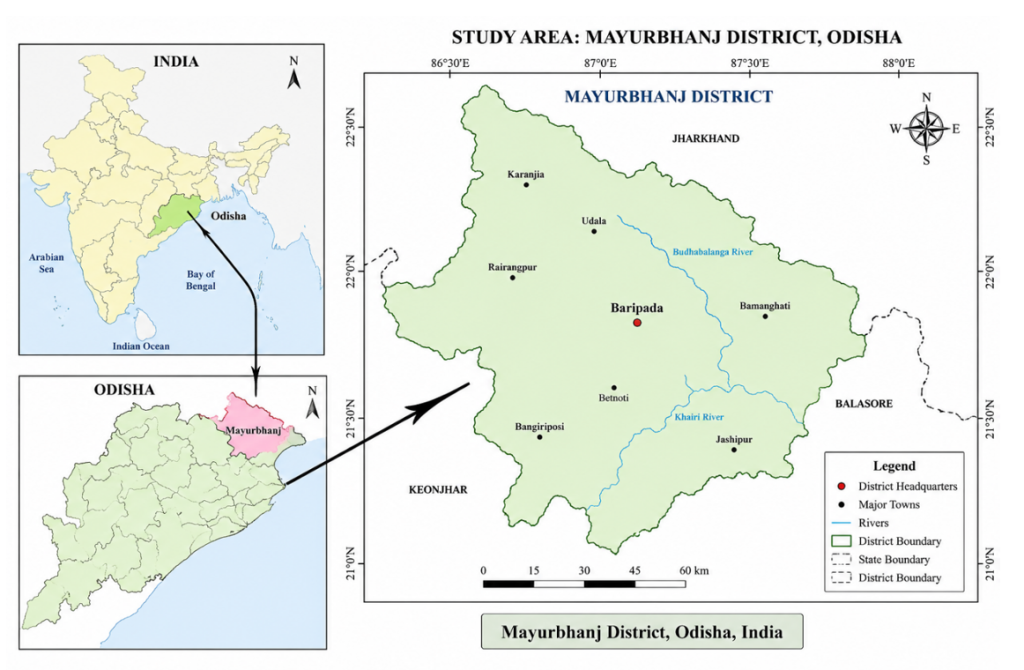
Figure 1: Location map of the study area showing the geographic position of Mayurbhanj district within Odisha state and India
Results and discussion
The present study documented a total of 38 host plant species associated with the red weaver ant, across different locations of Mayurbhanj district, Odisha (Table 1; Figure 3). These species were distributed among 23 families, indicating a high degree of host plant diversity supporting the ant populations. Such diversity reflects the ecological adaptability of O. smaragdina and its ability to utilize a wide range of arboreal substrates for nest construction and colony establishment. Among the documented families, Anacardiaceae and Fabaceae were the most represented, each contributing multiple host species, followed by Lecythidaceae, Moraceae, Lamiaceae and Ebenaceae. The dominance of these families suggests their structural suitability, particularly leaf size, flexibility and canopy architecture for nest formation. Species such as Mangifera indica and Lannea coromandelica, along with Cassia fistula, Phanera vahlii and Saraca asoca, were frequently observed hosting active nests, highlighting their importance in sustaining Kurkuti populations. The distribution pattern of host plants across locations such as Dudhijharan, Thakurmunda, Bangriposi and Karanjia indicates that Kurkuti is widely available in both forested and semi-disturbed habitats. The presence of host plants in village peripheries and roadside areas suggests that O. smaragdina can tolerate moderate anthropogenic disturbances. However, dense forest patches exhibited comparatively higher host plant richness and nest abundance, emphasizing the importance of intact forest ecosystems for maintaining stable ant populations. A notable observation is the predominance of tree species among the host plants, with relatively fewer shrubs and climbers. This preference can be attributed to the arboreal nesting behaviour of O. smaragdina, which requires interconnected canopies and sturdy foliage for colony expansion. Additionally, the occurrence of host plants such as Dendrophthoe falcata, a hemi-parasitic species, indicates the ecological flexibility of the ants in utilizing diverse plant types.
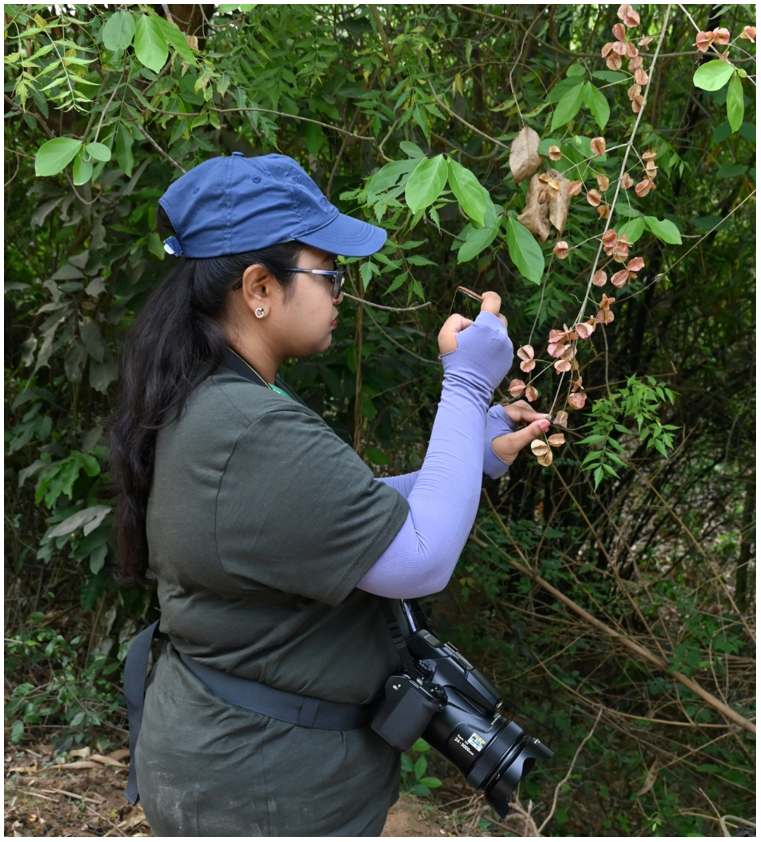
Figure 2: Field survey conducted in Mayurbhanj district, Odisha
Table 1: Host plants of Kurkuti in Mayurbhanj district, Odisha
Scientific name | Tribal name | Family | Location |
Artocarpus heterophyllus Lam. | Kanhar | Moraceae | Dudhijharan |
Azadirachta indica A.Juss. (Figure 3a) | Nimba | Meliaceae | Siltia |
Barringtonia acutangula (L.) Gaertn. (Figure 3b) | Hinjar | Lecythidaceae | Rairangpur |
Buchanania lanzan Spreng. (Figure 3c) | Tarop | Anacardiaceae | Ramchandrapur |
Calophyllum inophyllum L. | Polanga | Calophyllaceae | Purunapani |
Careya arborea Roxb. | Kumbre | Lecythidaceae | Ambatola |
Cassia fistula L. | Baneharlatia | Fabaceae | Jamukeshwar |
Clerodendrum infortunatum L. | Barni | Lamiaceae | Bhuyanbasa |
Combretum roxburghii Spreng. | Aten | Combretaceae | Badajodi |
Couroupita guianensis Aubl. | Nagesar | Lecythidaceae | Dadhiasahi |
Croton persimilis Müll.Arg. | Gote | Euphorbiaceae | Bisoi |
Dendrophthoe falcata (L.f.) Ettingsh. (Figure 3d) | Manda | Loranthaceae | Chandua |
Diospyros malabarica (Desr.) Kostel. | Makar kendu | Ebenaceae | Sarjomgada |
Diospyros melanoxylon Roxb. | Tiril | Ebenaceae | Kantasala |
Diospyros montana Roxb. | Gada terel | Ebenaceae | Jamda |
Ficus benghalensis L. | Bare | Moraceae | Betnoti |
Ficus religiosa L. (Figure 3e) | Hesak | Moraceae | Thakurmunda |
Glochidion ellipticum Wight | Khakada | Phyllanthaceae | Bangriposi |
Glochidion lanceolarium (Roxb.) Voigt | Khakada | Phyllanthaceae | Deuli |
Gmelina arborea Roxb. ex Sm. | Kasmar | Lamiaceae | Karanjia |
Holarrhena pubescens Wall. ex G.Don | Hat | Apocynaceae | Jashipur |
Homonoia riparia Lour. | Gurjor | Euphorbiaceae | Mahuldiha |
Ixora pavetta Andrews | Merommet | Rubiaceae | Pahadpur |
Lagerstroemia speciosa (L.) Martyn | Sekra | Lythraceae | Jamdiha |
Lannea coromandelica (Houtt.) Merr. (Figure 3f) | Doka | Anacardiaceae | Ambatola |
Madhuca longifolia (L.) J.F.Macbr. (Figure 3g) | Mahua | Sapotaceae | Suleipat |
Mangifera indica L. (Figure 3h) | Uli | Anacardiaceae | Thakurmunda |
Miliusa tomentosa (Roxb.) Finet & Gagnep. | Ome | Annonaceae | Rasgobindpur |
Ougeinia oojeinensis (Roxb.) Hochr. | Rot | Fabaceae | Dudhijharan |
Phanera vahlii (Wight & Arn.) Benth. (Figure 3i) | Jom-lar | Fabaceae | Kaptipada |
Saraca asoca (Roxb.) W.J.de Wilde | Husangid-ba | Fabaceae | Bhandan |
Schleichera oleosa (Lour.) Oken (Figure 3j) | Baru | Sapindaceae | Udala |
Semecarpus anacardium L.f. | Soso | Anacardiaceae | Tetulsahi |
Shorea robusta C.F.Gaertn. (Figure 3k) | Sarjam | Dipterocarpaceae | Bangiriposi |
Strychnos nux-vomica L. (Figure 3l) | Kochila | Loganiaceae | Manoharpur |
Syzygium cumini (L.) Skeels | Jamun | Myrtaceae | Edelbeda |
Terminalia chebula Retz. | Rola | Combretaceae | Champuda |
Vitex negundo L. | Sinduari | Lamiaceae | Rengalbeda |
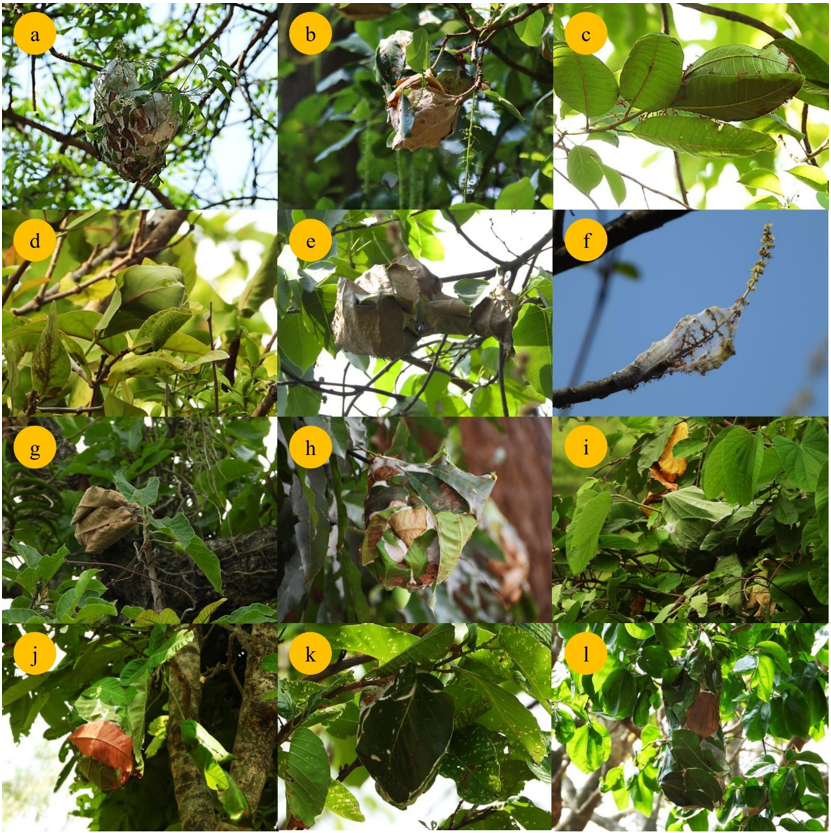
Figure 3: Host plants of Kurkuti in Mayurbhanj district; a) Azadirachta indica, b) Barringtonia acutangula, c) Buchanania lanzan, d) Dendrophthoe falcata, e) Ficus religiosa, f) Lannea coromandelica, g) Madhuca longifolia, h) Mangifera indica, i) Phanera vahlii, j) Schleichera oleosa, k) Shorea robusta and l) Strychnos nux-vomica
Observations similar to the present study have been reported from other regions of India, where host plant architecture, canopy connectivity and foliage characteristics strongly influence nest establishment and colony persistence (Rajagopal et al., 2019; Patel and Bhatt, 2020). The findings are in close agreement with the pioneering work of Jena et al., (2020), who documented the traditional consumption and medicinal importance of red weaver ants among tribal communities of Mayurbhanj district. Their study established Kurkuti as an important indigenous food resource, rich in protein and widely used in the preparation of traditional chutney for treating common ailments such as cough, fever, loss of appetite and body pain. While the earlier study primarily emphasized the socio-cultural and nutritional significance of the species, the present investigation extends this understanding by demonstrating that the continuity of these traditional practices is directly dependent on the conservation of host plant diversity. Thus, preserving the vegetation supporting O. smaragdina colonies is equally important for safeguarding indigenous food traditions and associated cultural heritage. Recent ethnobotanical investigations in Mayurbhanj district have revealed exceptionally rich traditional knowledge associated with forest resources. Jena et al., (2025) documented extensive utilization of wild plant species by indigenous communities for food, medicine and livelihood support, emphasizing the continued dependence of tribal populations on forest biodiversity. The present study complements these findings by identifying host plant species that not only provide nesting substrates for O. smaragdina but also possess significant ethnobotanical value. Species such as Madhuca longifolia, Mangifera indica, Buchanania lanzan, Syzygium cumini, Artocarpus heterophyllus and Shorea robusta are simultaneously important for local livelihoods and for maintaining ant populations. This overlap suggests that conserving these multipurpose tree species would generate dual ecological and socio-economic benefits by supporting biodiversity while sustaining traditional food systems. The predominance of members of Anacardiaceae, Fabaceae and Moraceae as host plants observed in the present study is consistent with reports from other regions of India, where large-canopied tree species with flexible leaves provide favourable nesting conditions for O. smaragdina. Trees such as Mangifera indica, Lannea coromandelica, Ficus benghalensis and Ficus religiosa offer extensive branching patterns and interconnected canopies that facilitate colony expansion and long-term nest stability. Such structural characteristics are considered among the principal determinants of host plant selection by weaver ants and explain their repeated occurrence across different ecological landscapes. The study further highlights the importance of community participation in conserving Kurkuti habitats. Indigenous communities of Mayurbhanj have traditionally harvested red weaver ants without destroying colonies, allowing natural regeneration and recolonization. However, increasing deforestation, forest fragmentation, road expansion and unsustainable extraction of forest resources may reduce the abundance of suitable host plants, thereby threatening both ant populations and the associated traditional knowledge system. Similar concerns regarding habitat degradation and its influence on O. smaragdina distribution have been raised in recent ecological studies (Ma et al., 2025), emphasizing the necessity of habitat-based conservation approaches. From a conservation perspective, the present study provides one of the first comprehensive accounts of the ant–host plant relationship in Mayurbhanj district. While earlier investigations from the district primarily focused on the nutritional, medicinal and cultural importance of Kurkuti (Jena et al., 2020), this study establishes the ecological foundation underpinning its persistence. The results demonstrate that conservation strategies should move beyond species-level protection and incorporate habitat restoration, enrichment planting of preferred native host species, and community-led forest management. Such integrated approaches would not only ensure the long-term survival of O. smaragdina populations but also contribute to the conservation of indigenous traditional food systems, forest biodiversity and the biocultural heritage of Mayurbhanj district.
Conclusion
The present study clearly demonstrates that the sustainability of Oecophylla smaragdina as a traditional indigenous food resource is strongly dependent on the availability and diversity of its host plants. The present documentation in Mayurbhanj district highlights a rich and functionally diverse host plant assemblage that supports stable ant populations in both forested and semi-disturbed landscapes. The predominance of key arboreal families such as Anacardiaceae, Fabaceae and Moraceae further emphasizes the ecological importance of structurally suitable vegetation in maintaining ant colonies. The study also reveals that Kurkuti is not merely an ecological entity but an integral component of local cultural heritage, closely linked with indigenous knowledge systems and rural livelihoods. However, increasing habitat alteration, deforestation and fragmentation of native vegetation pose significant threats to both host plant diversity and ant populations. The observed dependence of O. smaragdina on specific tree species highlights the urgency of conserving native flora to ensure the continuity of this traditional food practice. Therefore, effective conservation of Kurkuti requires an integrated approach that combines habitat protection, promotion of native tree species through agroforestry and incorporation of indigenous knowledge into biodiversity management strategies. Strengthening community participation in conservation initiatives will be crucial for sustaining both ecological balance and cultural heritage. This study thus provides a scientific basis for linking host plant conservation with the long-term preservation of an important cultural food resource in the region.
Acknowledgements
Authors are thankful to the HOD, Department of Life Sciences, Rama Devi Women’s University, Bhubaneswar, Odisha, India. Authors are also grateful to the Divisional Forest Officers (DFOs), Baripada Forest Division, Rairangpur Forest Division and Karanjia Forest Division, Odisha, along with the local communities of the study areas. Authors are also thankful to Dr. Sanjeet Kumar for his help in the identification of the host plants of Red Weaver Ants and also to the team members of Ambika Prasad Research Foundation, Odisha, India, for their huge support.
References
Exélis MP, Ramli R, Zakaria R, Idris AH, Ya’cob Z, Ibrahim RW, Yaakop S and Othman NW. (2025). The social organization of the Asian weaver ant colonies: a natural enemy novel sub-castes worker’s functional activity findings. PLoS One. 20(6): e0326030. doi: 10.1371/journal.pone.0326030
Ghosh S, Meyer-Rochow VB, Jung C. (2023). Embracing tradition: the vital role of traditional foods in achieving nutrition security. Foods. 12(23): 4220. doi: 10.3390/foods12234220
Jena N, Rout S, Mishra S and Kumar S. (2025). Evaluation of quantitative ethnobotanical uses in Mayurbhanj district, Odisha, India. Journal of Biodiversity and Conservation. 9(1): 1-29.
Jena S, Das SS and Sahu HK. (2020). Traditional value of Red Weaver Ant (Oecophylla smaragdina) as food and medicine in Mayurbhanj district of Odisha, India. International Journal for Research in Applied Science and Engineering Technology. 8(5): 936-946.
Kumar S, Mishra AK, Kumar SN and Hansdah P. (2022a). Red Weaver Ants. Divisional Forest Officer, Bonai Forest Division, Odisha and Ambika Prasad Research Foundation, Odisha, India.
Kumar S, Mishra S, Mishra AK and Kumar SN. (2022b). Floral Diversity of Koira & Barsuan Ranges of Bonai Forest Division, Odisha. Divisional Forest Officer, Bonai Forest Division, Odisha and Ambika Prasad Research Foundation, Odisha, India.
Ma R, Zhang L, Yang L and He H. (2025). Potential distribution of the weaver ant Oecophylla under current and future climate. Pest Management Science. 81(9): 5324-5334.
Nayak S and Kumar S. (2023). Medicinal plants used by tribals of Odisha. State Medicinal Plants Board, Odisha and Ambika Prasad Research Foundation, Odisha, India.
Offenberg J. (2021). Weaver Ants (Oecophylla). In: Starr CK (Eds.). Encyclopedia of Social Insects. Springer, Cham, Switzerland, Europe.
Patel D and Bhatt N. (2020). Nesting, protective and foraging behavior of Oecophylla smaragdina (Weaver Ants) in Anand, Gujarat. Advances in Zoology and Botany. 8(4): 351-357.
Rajagopal T, Singam P, Kulandaivel S, Selvarani S, Sevarkodiyone S and Ponmanickam P. (2019). Survey of red weaver ants (Oecophylla smaragdina) and their host plants in urban and rural habitats of Madurai District, Tamil Nadu, India. Journal of Entomology and Zoology Studies. 7(1): 938-943.
Rout S, Rath SK, Kumbhar MM and Kumar S. (2025). Host plant diversity of Red Weaver Ants (Oecophylla smaragdina) and their ecological link to the Indian Pangolin in Sundargarh, Odisha. Indian Forester. 151(10): 1005-1009.
Saxena HO and Brahmam M. (1994-1996). The Flora of Orissa, Volume I-IV. Regional Research Laboratory, Bhubaneswar and Orissa Forest Development Corporation Limited, Bhubaneswar, Odisha, India.

Dedicated to advancing biodiversity conservation and the sustainable management of natural resources for current and future generations.
Copyright © 2026 Journal of Biodiversity And Conservation || Designed By Antler’s Solution