
Journal of Biodiversity and Conservation 10(3): 71-81
2026
ISSN: 2457-0761 (online)
Ravi Kumar1, Kavita2, Aarti2, Nishta Kadyan2, Ranjeet Singh3 and Balkar Singh4*
1Department of Botany, SD (PG) College, Panipat, Haryana, India 132103
2Department of Botany, Kurukshetra University, Kurukshetra, Haryana, India 136119
3Department of Botany, Pt. CLS Govt. College, Karnal, Haryana, India 132001
4Department of Botany, Arya P.G. College, Panipat, Haryana, India 132103
*Email ID: balkararya@gmail.com; ORCID: https://orcid.org/0000-0002-3730-7538
DOI: https://doi.org/10.5281/zenodo.21752406
Article Details: Received: 2026-06-26 | Accepted: 2026-08-01 | Available online: 2026-08-03
Licensed under a Creative Commons Attribution 4.0 International License
Abstract: Plant biodiversity forms the foundation of ecosystem stability and provides essential resources for food, medicine, timber and ecological services. However, rapid habitat loss, anthropogenic disturbances, invasive species and climate change have accelerated the decline of plant diversity worldwide. Traditional botanical surveys conducted by trained taxonomists are often constrained by limited funding, personnel and geographic coverage. Citizen science, the active involvement of the public in scientific research, has emerged as an effective approach for documenting plant biodiversity at large spatial and temporal scales. With the widespread availability of smartphones, GPS technology and digital platforms such as iNaturalist, Pl@ntNet, Global Biodiversity Information Facility, India Biodiversity Portal and eFloraofindia, citizens can contribute valuable plant occurrence records, photographs and phenological observations. These data support taxonomic research, conservation planning, invasive species monitoring, climate change studies and biodiversity assessments. This article reviews the concept of citizen science, its applications in plant biodiversity documentation, advantages, limitations and future prospects, emphasizing its growing importance in complementing professional botanical research.
Keywords: Biodiversity informatics, crowdsourcing, phenology
Introduction
Plant biodiversity encompasses the diverse plant species, their genetic diversity and the ecosystems they inhabit. Accurate documentation of plant diversity is fundamental for taxonomy, ecological research, conservation planning, sustainable resource management and environmental policy. Traditionally, botanical exploration has relied on trained taxonomists conducting field surveys, collecting herbarium specimens and publishing floristic accounts. While these methods provide highly reliable data, they require significant expertise, financial resources and time (Silva et al., 2019). Global biodiversity faces unprecedented threats from habitat destruction, urbanization, climate change, pollution, overexploitation and biological invasions. Citizen science has become a valuable means of bridging this gap. It involves public participation in scientific research, where volunteers collect, photograph, identify and share biological observations under scientific guidance (Echeverria et al., 2021). Modern mobile applications equipped with GPS, digital photography and artificial intelligence have transformed ordinary citizens into important contributors to biodiversity documentation. It has significantly expanded plant occurrence databases by generating millions of georeferenced observations that complement herbarium collections and professional surveys (Chozas et al., 2023). The integration of citizen-generated data with global biodiversity repositories has revolutionized plant documentation and ecological monitoring.
What is citizen science?
Citizen science refers to the voluntary participation of non-professional individuals in scientific research activities, where members of the public contribute to the collection, documentation and monitoring of scientific data, including photographic evidence under the guidance of researchers or scientific organizations (Gillespie et al., 2022). In the field of plant biodiversity, citizen scientists play an important role by recording plant occurrences, photographing plant species, identifying plants using digital identification tools and mobile applications, monitoring flowering and fruiting patterns, reporting the presence of invasive plant species, mapping the distribution of rare or endangered plants and uploading georeferenced observations to online biodiversity databases (Forti and Szabo, 2024). These contributions generate large volumes of valuable data that enhance biodiversity inventories and support ecological and conservation research. Before the information is incorporated into scientific studies or public databases, it is typically reviewed by botanical experts or validated through community consensus to ensure its accuracy and reliability (Figure 1).
Evolution of citizen science in botany
Historically, amateur botanists have made remarkable contributions to plant taxonomy and floristics. Before the development of modern scientific institutions, many important plant collections were made by naturalists, teachers, physicians and explorers (Julien and Chalmeau, 2025). Citizen science in plant biodiversity has evolved from traditional botanical documentation to advanced technology-based biodiversity monitoring. Initially, amateur botanists and naturalists contributed through herbarium collections, field observations and botanical records, which remain valuable sources of historical biodiversity information (Silva et al., 2019). The early digital era introduced online biodiversity databases such as GBIF, enabling the storage and sharing of plant occurrence records. The widespread use of smartphones further transformed citizen science through mobile applications like iNaturalist and Pl@ntNet, allowing volunteers to document plants using photographs and GPS-enabled observations while promoting environmental education and public participation (Echeverria et al., 2021; Chozas et al., 2023).
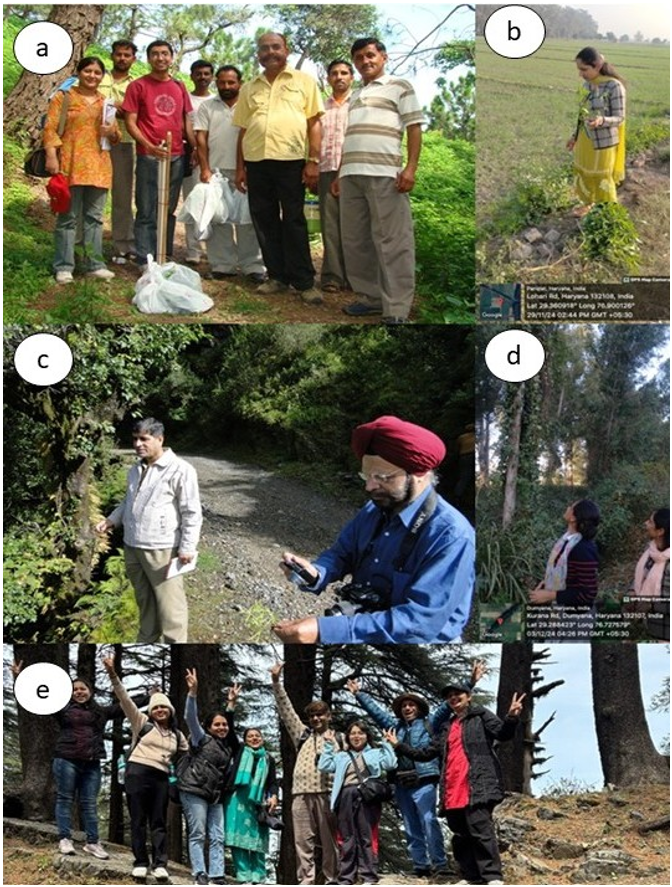
Figure 1: A-E: Glimpses of Citizen Scientists activities. A. Experts in Kalesar National Park with local people; B. Collecting samples photography with GPS Data; C. eFloraofindia team leader Dr. Gurcharan Singh with local forest officials in Chakrata; D. Capturing climbers along roadside area with the help of locals and E. During a plant exploration programme in Budher Caves area (Dehradun District, Uttarakhand) with founder of eFloraofindia Shri JM Garg
More recently, artificial intelligence has improved automatic species identification through image recognition, enhancing the accuracy of citizen-generated data (Gillespie et al., 2022). Today, citizen science integrates remote sensing, Geographic Information Systems (GIS) and machine learning to support large-scale biodiversity mapping, ecological research and evidence-based plant conservation (Figure 2; Table 1). The digital revolution has accelerated citizen science through:
Today, millions of plant observations are uploaded annually from around the world.
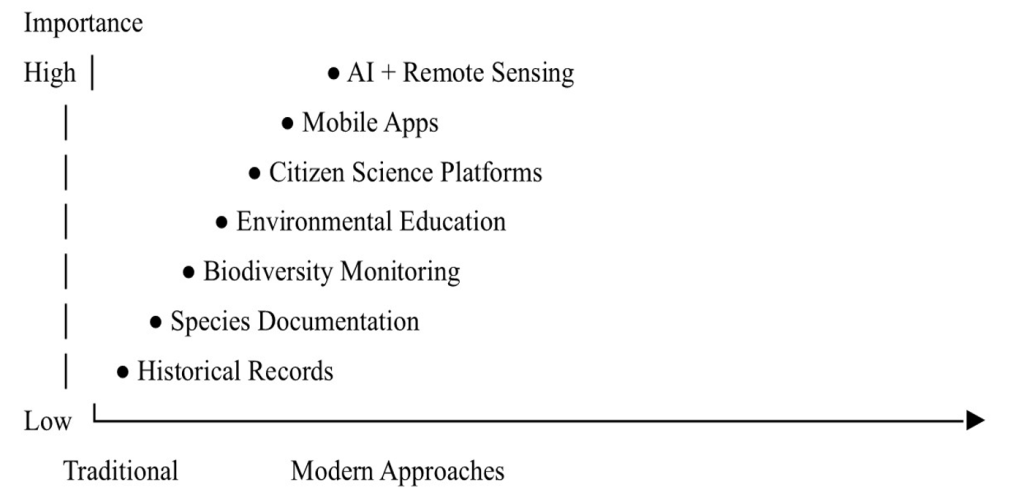
Figure 2: Evolution of citizen science approaches for plant biodiversity.
Major citizen science platforms for plant biodiversity documentation
iNaturalist: iNaturalist is one of the world’s largest citizen science platforms dedicated to documenting biodiversity. Developed to encourage public participation in biodiversity research, it enables users to record plant observations using GPS-enabled smartphones, upload high-quality photographs and receive artificial intelligence (AI)-based species identification suggestions. Observations are further verified through a community of naturalists and taxonomic experts, ensuring improved data accuracy. The platform maintains a comprehensive global database and shares validated records with international biodiversity repositories such as the Global Biodiversity Information Facility (GBIF). In plant sciences, Naturalist has become an invaluable resource for floristic surveys, documentation of rare and threatened species, monitoring of invasive plants, biodiversity inventories and conservation planning within protected areas (Figure 3).
Pl@ntNet: Pl@ntNet is a widely used mobile application specifically designed for plant identification through image recognition technology. Users can identify plants by uploading photographs of diagnostic features such as leaves, flowers, fruits, bark or stems. The application employs artificial intelligence algorithms combined with community validation to improve identification accuracy and continuously enhance its database. Its user-friendly interface and global accessibility make it an excellent educational tool for students, researchers, naturalists and the general public. Pl@ntNet has significantly contributed to the documentation of both wild and cultivated plant species while promoting botanical literacy among citizens (Figure 3).
Global Biodiversity Information Facility (GBIF): The Global Biodiversity Information Facility (GBIF) is an international open-access biodiversity data infrastructure rather than a direct citizen science platform. It aggregates species occurrence records from multiple sources, including herbaria, museums, research institutions, government agencies and citizen science initiatives such as iNaturalist. Through integrating millions of georeferenced biodiversity records, GBIF provides an essential resource for mapping species distributions, analysing biogeographical patterns, modelling the effects of climate change, conducting conservation assessments and supporting ecological and taxonomic research. The availability of standardized and openly accessible datasets has greatly enhanced global biodiversity studies (Figure 3).
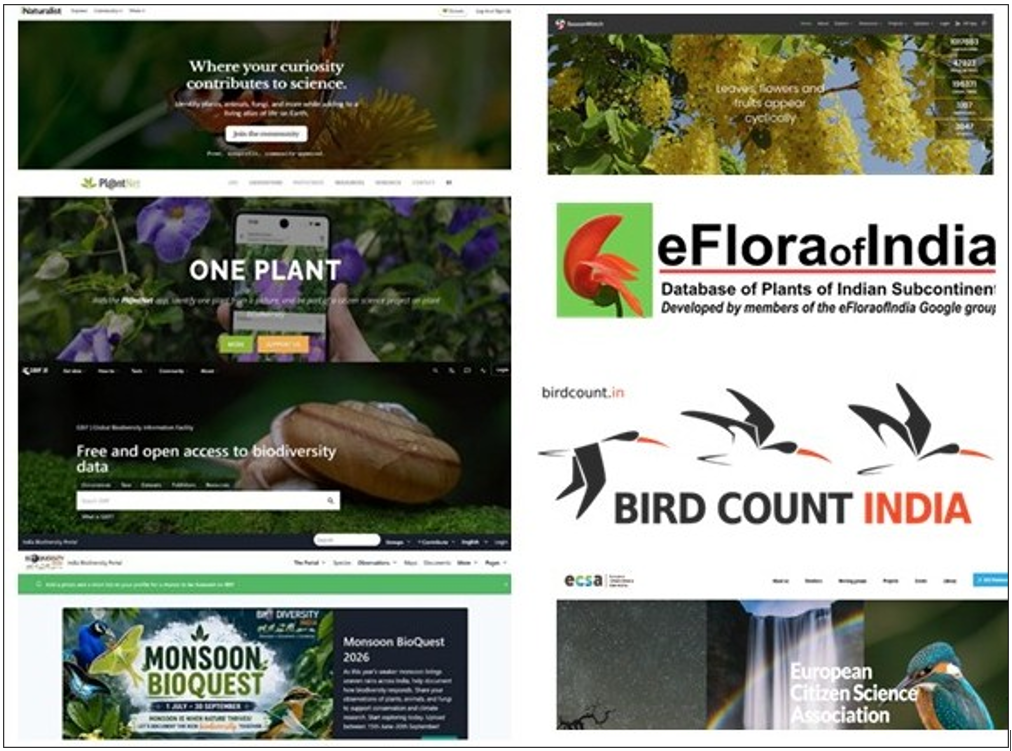
Figure 3: Citizen Science Platforms for Plant Biodiversity documentation
India Biodiversity Portal: The India Biodiversity Portal is a collaborative online platform developed to document and disseminate information on the country’s rich biological diversity. It encourages active participation by researchers, students, nature enthusiasts and local communities in recording species observations, uploading photographs and sharing distributional information. The portal facilitates expert verification of records and contributes valuable data for biodiversity mapping, floristic studies, ecological monitoring and conservation planning. Integrating citizen-generated observations with scientific knowledge, the platform has become an important resource for understanding India’s diverse flora and fauna (Figure 3).
eFloraofIndia: eFloraofIndia (eFI) initially started as a Google group in June 2007 and is now one of the biggest citizen science platforms in India. Presently, this platform has the largest database on Indian flora on the net, with more than 14,000 species, which are represented through more than 4,00,000 pictures shared by members of the group. Most of the images gathered by this group have already been displayed at species’ pages on the website of eFloraofIndia. This is one of the biggest non-commercial sites, without any advertisements. Flora of the Indian Subcontinent is being documented and discussed on eFloraofIndia Google e-group since its inception and many new species and distributional records have been published using information shared in this group (Figure 3).
eFlora and Regional Biodiversity Networks: Several countries have established national and regional eFlora projects and biodiversity networks that integrate citizen science with professional botanical research. Recently, Riyaz (2022) has enlisted 140 different citizen science initiatives related to biodiversity monitoring and conservation worldwide. These online platforms enable volunteers to upload plant observations, photographs and locality information while allowing taxonomic experts to verify species identifications. Such collaborative initiatives support the preparation and updating of regional floras, improve knowledge of plant distribution patterns, facilitate the discovery of new locality records and strengthen long-term biodiversity monitoring. Collectively, these networks enhance public engagement in botanical research while providing reliable datasets for conservation, ecological studies and biodiversity management (Figure 3).
Methodology of citizen science-based plant documentation
Citizen science-based plant documentation follows a systematic workflow that ensures the collection of reliable and scientifically useful biodiversity data. The process begins with field observations, during which participants locate and observe plant species in their natural habitats. High-quality photographs of diagnostic characters, including leaves, flowers, fruits, bark, stems or the entire plant, are captured to facilitate accurate identification. Simultaneously, the geographical location of each observation is recorded using the Global Positioning System (GPS) and additional ecological information such as habitat type, elevation, associated vegetation, date of observation and phenological stage is documented. The collected observations are subsequently uploaded to online citizen science platforms, where artificial intelligence (AI)-based algorithms provide preliminary species identification. These identifications are further refined through community review by experienced users and taxonomic experts, who validate the records based on photographic evidence and supporting information. Once verified, the observations are incorporated into national or global biodiversity databases, where they become accessible for scientific research. The validated data contribute to floristic surveys, species distribution mapping, biodiversity assessments, conservation planning, invasive species monitoring, phenological studies and climate change research, thereby complementing conventional botanical surveys and herbarium collections.
Types of plant data collected
Citizen scientists collect a wide range of botanical information that contributes significantly to plant biodiversity research and conservation. The most common data include species occurrence records, which provide information on the presence and distribution of plant species across different geographical regions. Observations often include phenological details such as flowering and fruiting periods, leaf emergence and other seasonal changes that are valuable for studying the effects of climate variability and environmental change.
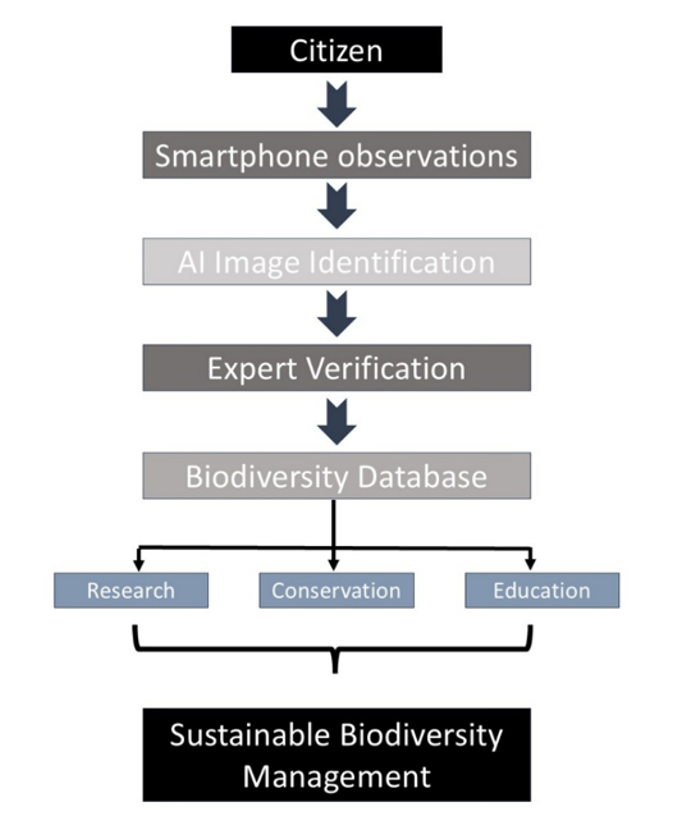
Figure 4: Integrated citizen science framework for plant biodiversity
Participants also record habitat characteristics, including vegetation type, altitude, ecological conditions and associated plant communities, along with precise geographical coordinates obtained using Global Positioning System (GPS) technology. In many cases, citizen scientists estimate population size or abundance and document the occurrence of invasive alien species and threatened or endangered plants, thereby supporting conservation monitoring and management. Additionally, observations of medicinally important plant species, including their distribution and habitat preferences, contribute to ethnobotanical research and the sustainable utilization of plant resources. Collectively, these diverse datasets provide valuable information for floristic inventories, species distribution modelling, ecological studies, biodiversity assessments and evidence-based conservation planning (Figure 4).
Table 1: Comparative contributions of earlier studies to citizen science
Major contributions | Source(s) |
Historical biodiversity information from botanical letters | Silva et al., (2019) |
iNaturalist in biodiversity education | Echeverria et al., (2021) |
Mobile applications for botany education | Chozas et al., (2023) |
AI remote sensing and citizen science | Gillespie et al., (2022) |
Reducing plant blindness | Forti and Szabo, (2024) |
Environmental education and local biodiversity | Julien and Chalmeau, (2025) |
Bibliometric analysis of plant citizen science | Nikolaou and Panitsa, (2026) |
Citizen science for soil biodiversity | Barantal et al., (2026) |
eFloraofIndia | efloraofIndia, (2026) |
Contemporary issues and future prospects of citizen science in plant biodiversity documentation
Citizen science has become an indispensable tool for plant biodiversity documentation by generating extensive, high-quality datasets that complement traditional botanical surveys and herbarium collections. These citizen science initiatives are not new ones. Their history starts in 1900 when Frank Chapman proposed to start the first annual Christmas Bird Count. After this, many citizen science projects were launched, such as the Atlas of Australian Birds in 1973, the BG Garden Bird Watch in 1979 and the Golden Gate Raptor Observatory in 1984 (Riyaz, 2022). These and many other projects were started much before the information technology era. The above-mentioned projects were related to animal diversity. Work on floristic diversity is a rather new one and gained momentum after information technology came into existence. One of the most significant applications of citizen science initiatives is in floristic surveys, where observations contributed by volunteers substantially increase the documentation of plant species across diverse geographical regions. Georeferenced observations recorded through smartphones and GPS-enabled devices facilitate accurate species distribution mapping, enabling researchers to study biogeographical patterns, range expansions and habitat preferences. Repeated observations by citizen scientists also play a vital role in monitoring rare, threatened and endemic plant species, allowing conservationists to assess population trends and identify areas requiring immediate protection. Furthermore, citizen-generated reports contribute to the early detection, monitoring and management of invasive alien plant species, thereby helping to reduce ecological and economic impacts. Continuous recording of flowering, fruiting, leaf emergence and leaf fall provides valuable phenological information that improves understanding of seasonal biological events and their responses to environmental changes. Long-term citizen science datasets are increasingly being used in climate change research to investigate shifts in species distributions, alterations in phenological patterns and changes in ecosystem dynamics associated with changing climatic conditions. These observations also support conservation planning by identifying biodiversity hotspots, prioritizing conservation areas, designing protected area networks and informing evidence-based conservation policies. In addition, high-quality photographs submitted by citizen scientists assist taxonomists in accurate species identification, documenting new distribution records, rediscovering rare taxa and locating populations for detailed field investigations and herbarium specimen collection. The increasing popularity of citizen science is largely attributed to its numerous advantages. It enables biodiversity data collection over vast geographical areas at relatively low cost while providing continuous and real-time monitoring of plant diversity. Citizen participation enhances public awareness of biodiversity conservation, promotes environmental education and encourages community involvement in scientific research. The availability of millions of georeferenced photographs has created valuable digital archives that support taxonomic verification, ecological studies and biodiversity assessments. Moreover, citizen science complements the work of professional botanists by expanding the spatial and temporal coverage of biodiversity observations beyond what conventional surveys alone can achieve. Despite these advantages, citizen science faces several limitations that must be carefully addressed. Species misidentification, uneven geographical sampling, observer bias, inconsistent image quality, limited taxonomic expertise among participants, incomplete metadata, seasonal sampling bias and dependence on internet connectivity may affect data quality and reliability. Consequently, expert verification remains essential before citizen-generated observations are used for scientific analyses, conservation planning or policy formulation. To improve the accuracy and reliability of biodiversity data, several quality control measures have been adopted by citizen science platforms. These include expert review of submitted observations, community-based validation, artificial intelligence-assisted species identification, standardized data collection protocols, GPS verification of locality information, submission of multiple photographs highlighting diagnostic morphological characters, periodic database quality assessments and, where feasible, linking digital observations with authenticated herbarium voucher specimens. Such procedures substantially enhance the scientific value of citizen-generated datasets. Artificial intelligence (AI) has emerged as a transformative technology in citizen science by improving the efficiency and accuracy of plant identification and biodiversity documentation. Modern AI algorithms enable automatic species recognition through image analysis, classify plant photographs based on morphological characteristics, detect duplicate records, assess data quality, provide automated identification suggestions and facilitate large-scale biodiversity analyses. Although AI has significantly accelerated plant identification and data processing, it serves primarily as a decision-support tool and cannot replace the expertise of trained taxonomists, particularly for closely related or taxonomically complex species. Citizen science also makes substantial contributions to biodiversity conservation by enabling the identification of biodiversity hotspots, detecting habitat degradation, monitoring populations of threatened and endangered species, tracking the spread of invasive plants, supporting ecological restoration programmes, informing conservation policies and encouraging local communities to participate actively in biodiversity management. Such collaborative efforts strengthen conservation initiatives by integrating scientific knowledge with public participation. The future of citizen science in plant biodiversity documentation is highly promising, driven by rapid advances in digital technologies and increasing public engagement in environmental monitoring. Emerging innovations such as improved AI-based plant identification systems, drone-assisted biodiversity surveys, integration of citizen science data with remote sensing technologies, environmental DNA (eDNA) applications, real-time biodiversity monitoring dashboards, enhanced global data-sharing platforms and expanded participation by schools, universities and local communities are expected to revolutionize biodiversity documentation. Stronger collaboration among citizen scientists, professional botanists, conservation organizations and government agencies will further improve the accuracy, accessibility and scientific value of biodiversity information, ultimately supporting more effective research, conservation planning and sustainable management of plant diversity in the face of global environmental change.
Conclusion
Citizen science has emerged as a practical and effective approach for documenting plant biodiversity by complementing conventional botanical surveys with large-scale public participation. The widespread use of smartphones, GPS technology, digital cameras and artificial intelligence-based identification tools has enabled citizens to generate valuable biodiversity records from diverse habitats that may otherwise remain underexplored. These observations contribute to floristic inventories, species distribution mapping, phenological studies, invasive species monitoring and conservation planning, thereby strengthening scientific research and biodiversity management. In return, persons involved in citizen science activities also benefit at large, as it can inculcate a scientific temperament and better understanding of scientific phenomena. However, the scientific value of citizen-generated data depends on rigorous quality assurance through expert validation, standardized data collection protocols and continuous improvement of digital identification tools. The success of citizen science ultimately relies on strong collaboration among taxonomists, research institutions, conservation organizations, government agencies, educators and local communities. Training programmes, awareness campaigns and the promotion of reliable citizen science platforms can further enhance data quality and public engagement. In biodiversity-rich countries such as India, where vast areas remain inadequately documented, citizen science offers an opportunity to accelerate the discovery, monitoring and conservation of plant diversity while fostering environmental stewardship among the public. Through integrating citizen-generated observations with herbarium collections, molecular studies, remote sensing and biodiversity informatics, citizen science can play a pivotal role in building comprehensive and up-to-date plant databases that support sustainable conservation and informed decision-making for future generations.
References
Barantal S, Morillas L, Burton VJ, Sheard JK, Rienks F, Auclerc A, Perrin W, Sandén T and Ganault P. (2026). Citizen science contributions to soil biodiversity research and conservation: insights from European studies. Applied Soil Ecology. 217: 106608). https://doi.org/10.1016/j.apsoil.2025.106608
Chozas S, Nunes A, Serrano HC, Ascensão F, Tapia S, Máguas C and Branquinho C. (2023). Rescuing Botany: using citizen-science and mobile apps in the classroom and beyond. Biodiversity. 2: 6. https://doi.org/10.1038/s44185-023-00011-9
da Silva AMD, da Cruz MTG, Cabral-Oliveira J and Freitas H and Gouveia AC. (2019). Plant Letters: A citizen science project uncovering historical biodiversity data. Biodiversity Information Science and Standards. 3: e36153. https://doi.org/10.3897/biss.3.36153
Echeverria A, Ariz I, Moreno J, Peralta J and Gonzalez EM. (2021). Learning Plant Biodiversity in Nature: The Use of the Citizen-Science Platform iNaturalist as a Collaborative Tool in Secondary Education. Sustainability. 13(2): 735. https://doi.org/10.3390/su13020735
eFloraofindia (2026). eFlora of India – Database of Plants of Indian Subcontinent. www.efloraofindia.com (accessed on 15.07.2026)
Forti LR and Szabo JK. (2024). Raising Awareness of Plant Biodiversity and Combating Zoocentrism with Citizen Science: A Case Study of Undergraduate Students Pursuing Animal-Related Degrees in Northeast Brazil. Human Ecology. 52: 1049-1056.
Gillespie L, Ruffley M and Exposito-Alonso M. (2022). An image is worth a thousand species: combining neural networks, citizen science, and remote sensing to map biodiversity. bioRxiv. DOI: 10.1101/2022.08.16.504150.
Julien MP and Chalmeau R. (2025). A local citizen science project on biodiversity: At the crossroads of science and environmental education. Interdisciplinary Journal of Environmental and Science Education. 21(3): e2513. https://doi.org/10.29333/ijese/16619
Nikolaou AM and Panitsa M. (2026). Plant Diversity and Citizen Science: A Comparative Bibliometric Analysis with a Focus on Greece as a Case Study. Diversity. 18(6): 321. https://doi.org/10.3390/d18060321
Riyaz M. (2022). Citizen Science: A Significant Contribution to Biodiversity Monitoring and Conservation. Computational Biology and Bioinformatics. 10(2): 60-67.

Dedicated to advancing biodiversity conservation and the sustainable management of natural resources for current and future generations.
Copyright © 2026 Journal of Biodiversity And Conservation || Designed By Antler’s Solution