
Journal of Biodiversity and Conservation 10(3): 12-19
2026
ISSN: 2457-0761 (online)
Arun Kumar Mishra1 and Sanjeet Kumar2*
1HN-3002, DN Oxy Park, Dumuduma, Bhubaneswar- 751019, Odisha, India
2Biodiversity and Conservation Lab., Ambika Prasad Research Foundation, Odisha, India
*E-mail: sanjeetaprf@gmail.com; ORCID: https://orcid.org/0000-0001-9538-397X
DOI: https://doi.org/10.5281/zenodo.21483460
Article Details: Received: 2026-06-23 | Accepted: 2026-07-22 | Available online: 2026-07-23
Licensed under a Creative Commons Attribution 4.0 International License
Abstract: Habitat degradation and the decline of natural fodder resources are among the major threats to Asian elephant (Elephas maximus) populations across their range. A field survey conducted in the Bharatpur forest range, Chandaka-Dampara Wildlife Sanctuary, Odisha, India during 2025- 2026 and documented 17 preferred fodder plant species consumed by elephants, including grasses, bamboos, fruit-bearing trees, shrubs, climbers and medicinal plants. The study also recorded behavioural changes, notably the consumption of bark from the invasive species Acacia auriculiformis, indicating possible nutritional stress and scarcity of preferred forage. Restoration of native fodder plants emerges as a critical conservation strategy for sustaining elephant populations, reducing human-elephant conflict and improving ecosystem resilience. Present study discussed the ecological significance of fodder plant restoration and proposes a habitat management framework for elephant conservation in eastern India.
Keywords: Biodiversity management, ecosystem resilience, elephant nutrition, forest restoration, landscape connectivity, native vegetation
Introduction
The Asian elephant (Elephas maximus) is one of the most iconic and ecologically significant mega-herbivores of Asia (Sharma et al., 2025; Li et al., 2025). Recognized as an Endangered species by the International Union for Conservation of Nature (IUCN), the species has experienced substantial population declines due to habitat loss, fragmentation, poaching, human-elephant conflict and the degradation of natural food resources (Kumar and Dimri, 2021; de Silva et al., 2023). As a keystone species, Asian elephants play a pivotal role in maintaining ecosystem structure and function. Their feeding, browsing and movement patterns contribute to seed dispersal, forest regeneration, nutrient cycling and the creation of habitat heterogeneity, thereby supporting overall biodiversity and ecological resilience (Behera et al., 2020; Morel et al., 2025). Elephants require extensive home ranges and a continuous supply of diverse vegetation to meet their nutritional needs. An adult elephant consumes approximately 150–300 kg of plant material daily, including grasses, bamboo, leaves, bark, roots, fruits and shrubs (Packialakshmi et al., 2022). The availability and quality of fodder plants directly influence elephant health, reproductive success, movement patterns and habitat utilization (Prasad et al., 2025). Declining food resources often compel elephants to travel longer distances in search of forage, increasing encounters with human settlements and agricultural fields (Gautam et al., 2025). Consequently, the restoration and management of elephant fodder resources have emerged as critical components of conservation planning (Vogel et al., 2022). Odisha harbors one of the largest populations of Asian elephants in eastern India and serves as an important landscape for elephant conservation (Palei et al., 2024). Among the state’s elephant habitats, Chandaka-Dampara Wildlife Sanctuary, situated near Bhubaneswar, represents a significant refuge and movement corridor for elephant populations (Behera et al., 2025). The sanctuary supports a mosaic of dry deciduous forests, scrublands, grasslands and wetlands that provide food, shelter and migratory pathways for elephants (Behera et al., 2025). However, rapid urbanization around Bhubaneswar, habitat degradation, invasive species expansion, forest fires, and anthropogenic disturbances have adversely affected the composition and abundance of native vegetation. These changes have resulted in reduced availability of preferred fodder species and altered the feeding behaviour of elephants. Understanding the feeding preferences and dietary requirements of elephants is essential for developing effective habitat restoration and management strategies. Restoration of native fodder plants, particularly bamboo, grasses, fruit-bearing trees and palatable shrubs, can significantly enhance habitat quality and carrying capacity. Such interventions not only improve food security for elephants but also reduce their dependence on agricultural crops. Therefore, identifying and restoring preferred fodder species constitutes a practical and sustainable approach to conserving Asian elephants while simultaneously promoting ecosystem restoration and biodiversity conservation.
Methodology
A field survey was conducted in the Bharatpur forest range of Chandaka-Dampara Wildlife Sanctuary, Odisha, India during 2025-2026 (Figure 1) to document the preferred fodder plants of Asian elephants (Elephas maximus). Survey locations were selected based on evidence of regular elephant movement, feeding activity and habitat utilization. The study involved systematic field observations along elephant trails, feeding grounds, forest edges, water sources and other areas frequently visited by elephants. Direct and indirect evidence of feeding behavior was recorded during the survey. Indirect observations included browsing marks on vegetation, bark stripping, broken branches, uprooted plants, trampling signs, fruit remains, dung-associated plant fragments and feeding scars on trees and shrubs were noted. Direct observations of elephants consuming plant species were also recorded. Plant species were identified by the authors using regional flora books (Saxena and Brahmam,1994-1996). For each plant species recorded, the specific plant parts consumed by elephants were also noted.
Results and discussion
The field survey conducted in study areas documented a total of 16 preferred fodder plant species utilized by Asian elephants (Elephas maximus). These species represented diverse growth forms (Table 1; Plate 1). The major recorded fodder plants were Mangifera indica, Syzygium cumini, Aegle marmelos, Artocarpus heterophyllus, Bambusa bambos (Figure 2), Oryza rufipogon, Lannea coromandelica, Diospyros melanoxylon and other native species (Table 1; Plate 1). Fruits of species such as Mangifera indica, Syzygium cumini, Aegle marmelos and Artocarpus heterophyllus were frequently utilized, indicating the importance of fruit-bearing trees in elephant nutrition. Bamboo (Bambusa bambos) emerged as a major fodder resource, with elephants feeding on its leaves, stems and culms (Figure 2).
Table 1: Available preferred fodder plants of Asian Elephants in study areas
Local name | Botanical name | Parts consumed |
Acacia | Acacia auriculiformis A.Cunn. ex Benth. | Bark |
Amba | Mangifera indica L. | Fruits |
Ankula | Alangium salviifolium (L.f.) Wangerin | Fruits |
Atundi | Combretum roxburghii Spreng. | Whole plant |
Bana dhana | Oryza rufipogon Griff. | Whole plant |
Bela | Aegle marmelos (L.) Corrêa | Fruits |
Dantari | Senegalia pennata (L.) Maslin | Whole plant |
Jamun | Syzygium cumini (L.) Skeels | Fruits |
Kanta baunsa | Bambusa bambos (L.) Voss | Leaves, stem and culm |
Kendu | Diospyros melanoxylon Roxb. | Roots |
Lajakuli lata | Mimosa pudica L. | Whole plant |
Moi | Lannea coromandelica (Houtt.) Merr. | Bark |
Mudmudika | Helicteres isora L. | Stem bark |
Pansa | Artocarpus heterophyllus Lam. | Fruits |
Suangi nai | Antidesma ghaesembilla Gaertn. | Fruits and aerial parts |
Tala | Borassus flabellifer L. | Fruits & roots |
Behavioral changes and ecological implications
The field survey revealed a notable shift in the feeding behavior of Asian elephants, particularly the consumption of bark from Acacia auriculiformis, an invasive exotic tree species extensively planted in degraded forest landscapes. Under natural conditions, elephants preferentially feed on a diverse range of native grasses, bamboo, fruits, leaves, and woody vegetation that provide essential nutrients for their survival and reproduction. The increasing utilization of A. auriculiformis bark may indicate a decline in the availability and accessibility of preferred native fodder species within the sanctuary. Such behavioral adaptation is often associated with habitat degradation, reduced forage diversity and increasing ecological pressures on wildlife populations. The observed feeding pattern may also reflect nutritional stress resulting from the loss of native vegetation and alterations in habitat quality. The consumption of invasive plant species therefore represents an adaptive response to ecological constraints and changing environmental conditions. From a conservation perspective, this behavioural shift serves as an important ecological indicator of habitat deterioration and declining ecosystem health.
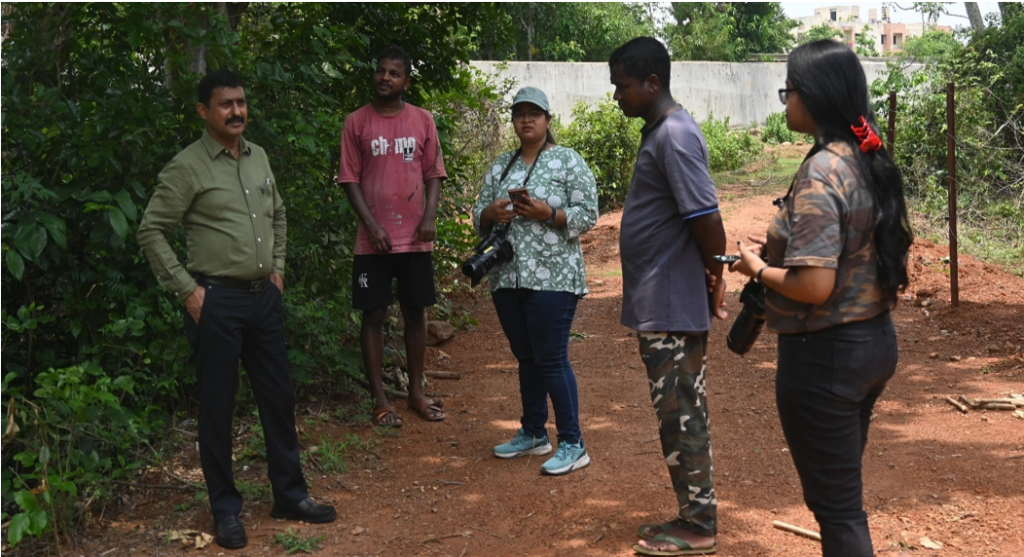
Figure 1: Team in field study
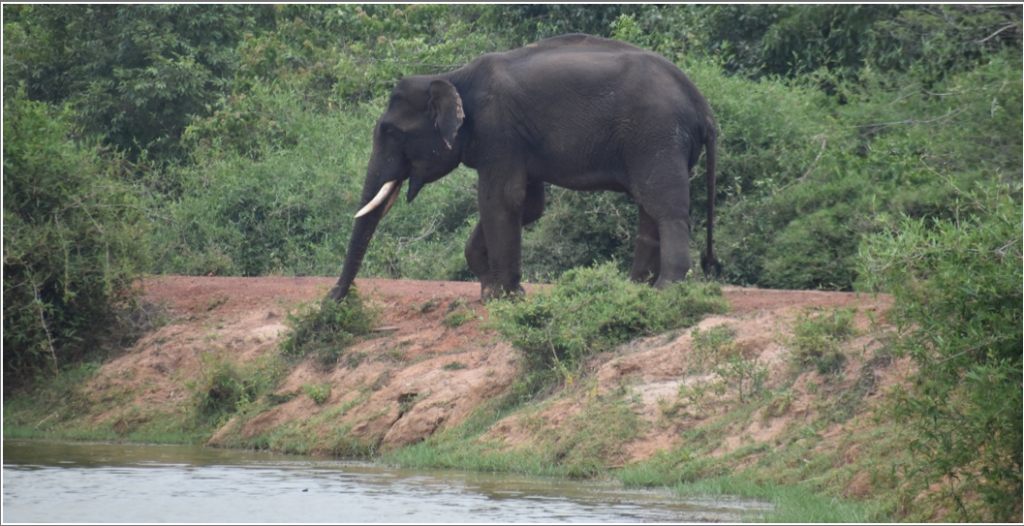
Figure 2: Elephant consuming leaves of Bambusa bambos
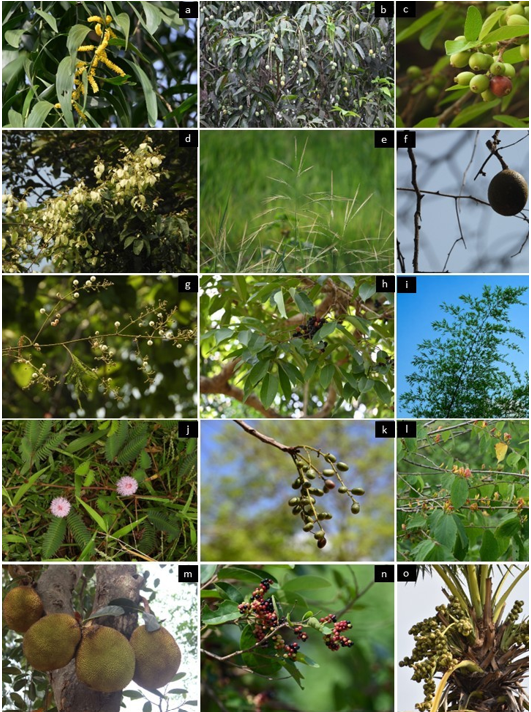
Plate 1: Enumerated fodder plants of Asian Elephants; a) A. auriculiformis, b) M. indica, c) A. salviifolium, d) C. roxburghii, e) O. rufipogon, f) A. marmelos, g) S. pennata, h) S. cumini, i) B. bambos, j) M. pudica, k) L. coromandelica, l) H. Isora, m) A. heterophyllus, n) A. ghaesembilla and o) B. flabellifer
Fodder plant restoration as a conservation strategy
Restoration of native fodder plants represents one of the most effective and sustainable strategies for the long-term conservation of Asian elephants. As large herbivores with substantial daily nutritional requirements, elephants depend on a diverse assemblage of grasses, bamboos, shrubs, climbers and fruit-bearing trees for survival. However, habitat degradation, invasion by exotic species, forest fragmentation, and anthropogenic disturbances have significantly reduced the availability of preferred forage resources. Consequently, improving the quantity, quality and diversity of fodder plants is essential for enhancing habitat suitability and supporting healthy elephant populations. The restoration process should prioritize the enrichment planting of key native fodder species identified during the study, including Bambusa bambos, Mangifera indica, Syzygium cumini, Aegle marmelos, Artocarpus heterophyllus, Senegalia pennata and Oryza rufipogon. Bamboo restoration is particularly important because it provides year-round forage and shelter, while fruit-bearing trees contribute significantly to the nutritional requirements of elephants during different seasons. Simultaneously, degraded forest patches and abandoned plantations should be rehabilitated through the replacement of invasive species with ecologically valuable native vegetation. The restoration of fodder resources can improve habitat carrying capacity, reduce nutritional stress, and decrease the need for elephants to move into agricultural landscapes in search of food. Such interventions are expected to minimize human–elephant conflict, enhance wildlife movement within natural habitats and strengthen ecosystem resilience. Furthermore, community participation in nursery development, plantation activities, habitat monitoring and protection of restored sites can ensure the long-term success of restoration programs. Therefore, fodder plant restoration should be integrated into elephant management and landscape conservation plans as a nature-based solution for conserving Asian elephants while simultaneously promoting biodiversity conservation and ecosystem sustainability.
Conclusion
The study demonstrates that the conservation of Asian elephants (Elephas maximus) is closely linked to the availability of diverse native fodder plants. The documented feeding preferences highlight the importance of bamboo, fruit-bearing trees, grasses and shrubs in maintaining elephant nutrition and habitat quality. The observed consumption of Acacia auriculiformis bark suggests declining native forage availability and increasing habitat stress. Therefore, restoring key fodder species in degraded forest areas is essential for improving habitat suitability, reducing nutritional stress and minimizing human–elephant conflict. Integrating fodder plant restoration into habitat management plans will not only support long-term elephant conservation but also enhance ecosystem resilience and biodiversity conservation within the habitat of Asian Elephants.
Acknowledgements
The authors express their sincere gratitude to the PCCF (Wildlife) & Chief Wildlife Warden, Forest, Environment and Climate Change Department, Government of Odisha, Odisha. Authors are also thankful to the Divisional Forest officer (DFO), Chandaka-Dampara Wildlife Sanctuary and frontline forest staff their valuable support during field surveys and for sharing their knowledge of elephant movements and habitat use. Special appreciation is extended to all team members who assisted in data collection and plant identification. The authors also acknowledge the Biodiversity and Conservation Lab., Ambika Prasad Research Foundation, Odisha, for providing academic and research support for this study.
References
Behera F, Devi RS, Sanghmitra A and Kumar S. (2020). Food plants assessment of Asian Elephant (Elephas maximus Linnaeus, 1758) in Dhenkanal district of Odisha, India: Tools for mitigation of Human-Elephant Conflict. NeBIO. 11(2): 117-124.
Behera SC, Mishra S, Mishra AK and Kumar S. (2025). Grasses of Chandaka-Dampara Wildlife Sanctuary. Ambika Prasad Research Foundation, India.
de Silva S, Wu T, Nyhus P, Weaver A, Thieme A, Johnson J, Wadey J, Mossbrucker A, Vu T, Neang T, Chen BS, Songer M and Leimgruber P. (2023). Land-use change is associated with multi-century loss of elephant ecosystems in Asia. Scientific Reports. 13(1): 5996. https://doi.org/10.1038/s41598-023-30650-8.
Gautam H, Berzaghi F, Thanikodi M, Ravichandran A, Sreeman SM and Sankaran M. (2025). Should elephants graze or browse? The nutritional and functional consequences of dietary variation in a mixed-feeding megaherbivore. Royal Society Open Science. 12(11): 250939. https://doi.org/10.1098/rsos.250939.
Kumar S and Dimri R. (2021). Some important food plants of Asian Elephant: A conservation approach. Centurion Journal of Multidisciplinary Research. 11(2): 10-19.
Li LL, He RC, Chen C and Quan RC. (2025). Asian elephants are associated with a more robust mammalian community in tropical forests. The Journal of Animal Ecology. 94(9): 1866–1878.
Morel M, Guldemond R, de la Garza MA and Bakker J. (2025). Memory-Based Navigation in Elephants: Implications for Survival Strategies and Conservation. Veterinary Sciences. 12(4): 312. https://doi.org/10.3390/vetsci12040312
Packialakshmi M, Palani Divya M, Baranidharan K, Geetha S, Nalliappan Ganesan K, Vijayabhama M, Manivasakan S, Hemalatha P, Radha P, Tilak M, Priyanka V, Krishnamoorthi S, Vinothini B, Yuvraj Zende J and Balu Rajput N. (2022). Exploring the Nutritional Potential of Wild Grass Fodder for Mega Herbivore (Elephas maximus) in the Foothills of Western Ghats. Animals: An Open Access Journal from MDPI. 12(19): 2668. https://doi.org/10.3390/ani12192668.
Palei HS, Jangid AK, Hanumant DD, Palei NC and Mishra AK. (2024). On the elephant trails: habitat suitability and connectivity for Asian elephants in eastern Indian landscape. Peer J. 12: e16746. https://doi.org/10.7717/peerj.16746.
Prasad S, Aditya V, Solomon J and Karanth KK. (2025). Community mitigation decisions in elephant conflict zones of southern India depend on environmental and socio-economic drivers. Scientific Reports. 15(1): 34693. https://doi.org/10.1038/s41598-025-14867-3.
Sharma BP, Kumar AN, Kumar N and Kumar S. (2025). Elephant, Forest, Human-elephant Conflicts and Fodder Plants: An Ecological View. Indian Forester. 151(10): 1012‐1018.
Vogel SM, Pasgaard M and Svenning JC. (2022). Joining forces toward proactive elephant and rhinoceros conservation. Conservation Biology: The Journal of the Society for Conservation Biology. 36(1): e13726. https://doi.org/10.1111/cobi.13726.
Saxena HO and Brahmam M. (1994-1996). The Flora of Orissa, Vol. I-IV. Regional Research Laboratory, Bhubaneswar and Orissa Forest Development Corporation Limited, Bhubaneswar, Odisha, India.

Dedicated to advancing biodiversity conservation and the sustainable management of natural resources for current and future generations.
Copyright © 2026 Journal of Biodiversity And Conservation || Designed By Antler’s Solution