
Journal of Biodiversity and Conservation 10(3): E1-E4
2026
ISSN: 2457-0761 (online)
Sanjeet Kumar
Biodiversity and Conservation Lab., Ambika Prasad Research Foundation, Odisha, India
E-mail: sanjeetaprf@gmail.com; ORCID: https://orcid.org/0000-0001-9538-397X
DOI: https://doi.org/10.5281/zenodo.21460696
Licensed under a Creative Commons Attribution 4.0 International License
Human–elephant conflict remains one of the greatest conservation challenges in Odisha state, India (Das et al., 2025). Crop raiding often occurs when natural food resources become insufficient or inaccessible. Identification of the tree species most preferred by elephants and ensuring their adequate availability within forests, forest officials can improve habitat productivity and reduce the need for elephants to forage outside habitat areas. Fodder plantations also established near elephant habitats can act as supplementary feeding zones, decreasing pressure on agricultural lands and promoting coexistence between humans and elephants (Dhamdhere et al., 2026). The Asian Elephant (Elephas maximus) is one of the most ecologically significant large herbivores inhabiting the tropical and subtropical forests of Asia (Figure 1). As a key species and ecosystem engineer, Asian Elephants play an indispensable role in maintaining forest structure, facilitating seed dispersal, creating canopy gaps and enhancing habitat heterogeneity (Behera et al., 2020). In India, Odisha state supports one of the largest populations of Asian elephants in eastern India with herds distributed across diverse landscapes. The long-term survival of these elephant populations depends largely on the availability, diversity and seasonal abundance of natural fodder resources (Sharma et al., 2025). Among the fodder plants, tree species form an important component of the elephant’s diet by providing bark, leaves, twigs, fruits, flowers, roots and young shoots throughout the year. Documenting fodder tree species is therefore a fundamental step in understanding the feeding ecology of Asian elephants. They exhibit clear preferences for certain tree species based on nutritional quality, digestibility, mineral composition, moisture content, seasonal availability and accessibility. Identifying these preferred tree species provides valuable insights into habitat quality, carrying capacity and the ecological requirements of elephant populations. Information on fodder tree species enables wildlife biologists to better understand how elephants utilize forest resources and how changes in vegetation composition may influence their movement patterns and survival. One of the major applications of documenting fodder trees is habitat assessment and management. Forests with high diversity and abundance of preferred fodder trees are generally capable of supporting healthier elephant populations. Conversely, degradation of these tree resources can reduce habitat suitability and force elephants to travel longer distances in search of food. Such movements frequently bring elephants into agricultural landscapes, increasing the incidence of human–elephant conflict.
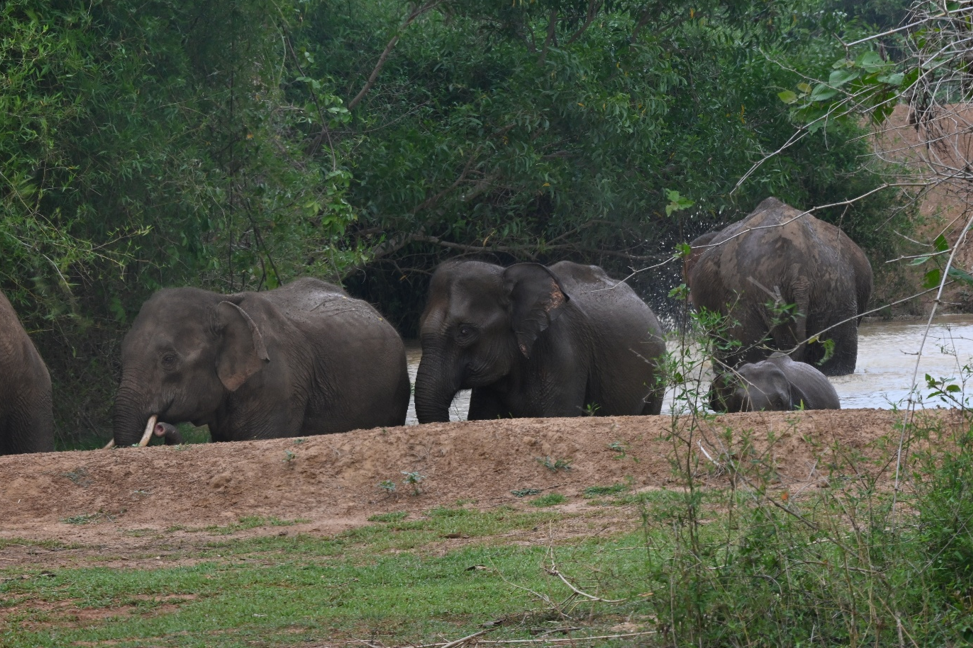
Figure 1: A heard of Asian Elephant in Odisha, India
In last decades, I visited several elephant habitats and corridors of Asian elephants in Odisha state and found that they usually consume about 29 preferred fodder tree species. Plants are identified using flora books (Saxena and Brahmam, 1994-1996). The most common fodder tree species are Aegle marmelos, Albizia odoratissima, Albizia procera, Artocarpus heterophyllus, Bombax ceiba, Bridelia retusa, Buchanania lanzan, Careya arborea, Chloroxylon swietenia, Dillenia aurea, Dillenia pentagyna, Diospyros melanoxylon, Ficus arnottiana, Ficus benghalensis, Ficus racemosa, Ficus virens, Gardenia latifolia, Lannea coromandelica, Limonia acidissima, Madhuca longifolia, Mallotus philippensis, Mangifera indica, Naringi crenulata, Phyllanthus emblica, Pterocarpus marsupium, Shorea robusta, Sterculia urens, Tamarindus indica, Terminalia bellirica and Ziziphus rugosa.
Table 1: Preferred fodder tree species of Asian Elephants
Plant Name | Local name | Parts consumed |
Aegle marmelos (L.) Corrêa | Bela | Fruits |
Albizia odoratissima (L.f.) Benth. | Tantera | Bark and twigs |
Albizia procera (Roxb.) Benth. | Sirisa | Bark |
Artocarpus heterophyllus Lam. | Pansa | Fruits |
Bombax ceiba L. | Simili | Twigs |
Bridelia retusa (L.) A.Juss. | Kasi | Bark and twigs |
Buchanania lanzan Spreng. | Chara | Bark and twigs |
Careya arborea Roxb. | Kumbhi | Bark |
Chloroxylon swietenia DC. | Bheru | Bark and twigs |
Dillenia aurea Sm. | Rai | Fruits |
Dillenia pentagyna Roxb. | Bada rai | Fruits |
Diospyros melanoxylon Roxb. | Kendu | Roots |
Ficus arnottiana (Miq.) Miq. | Bana Aswastha | All parts |
Ficus benghalensis L. | Bara | Bark, leaves and branches |
Ficus racemosa L. | Dimiri | All parts |
Ficus virens Aiton | Putkal | All parts |
Gardenia latifolia Aiton | Gurdu | All parts |
Lannea coromandelica (Houtt.) Merr. | Moi | Bark |
Limonia acidissima L. | Kaitha | Fruits |
Madhuca longifolia (L.) J.F.Macbr. | Mahula | Fruits |
Mallotus philippensis (Lam.) Müll.Arg. | Sundari | Bark and branches |
Mangifera indica L. | Amba | Fruits |
Naringi crenulata (Roxb.) Nicolson | Bentha | Twigs |
Phyllanthus emblica L. | Aonla | Fruits and twigs |
Pterocarpus marsupium Roxb. | Piasala | Bark |
Shorea robusta C.F.Gaertn. | Sal | Bark & Leaves |
Sterculia urens Roxb. | Genduli | Bark |
Tamarindus indica L. | Tentuli | Twigs |
Terminalia bellirica (Gaertn.) Roxb. | Bahada | Twigs |
Ziziphus rugosa Lam. | Chunkoli | Twigs and fruits |
These species collectively represent an important natural food resource that supports elephant populations throughout different seasons (Table 1). The present documentation provides a scientifically validated list of native tree species that should receive priority during restoration activities. Such restoration programmes are particularly important in degraded forests and elephant corridors where food resources have diminished.
References
Behera F, Devi RS, Sanghamitra A and Kumar S. (2020). Food plants assessment of Asian elephant (Elephas maximus Linnaeus,1758) in Dhenkanal district of Odisha, India: Tools for mitigation of Human-Elephant conflict. NeBIO. 11(2): 117-124.
Das A, Kumar N, Panda A, Uniyal R, Sahu BK, Rout S and Kumar S. (2025). Human-elephant conflicts in India. Faunal Wealth of India, Volume 1. Ambika Prasad Research Foundation, Odisha, India.
Dhamdhere DH, Ramaswamy P and Kumar S. (2026). Fodder Plants of Asian Elephants in Keonjhar Forest Division, Odisha. Ambika Prasad Research foundation, Odisha, India.
Saxena HO and Brahmam M. (1994-1996). The Flora of Orissa, Vol. I-IV. Regional Research Laboratory, Bhubaneswar and Orissa Forest Development Corporation Limited, Bhubaneswar, Odisha, India.
Sharma BP, Kumar NA, Kumar N and Kumar S. (2025). Elephant, Forest, Human-elephant Conflicts and Fodder Plants: An Ecological View. Indian Forester. 151(10): 1012-1018.

Dedicated to advancing biodiversity conservation and the sustainable management of natural resources for current and future generations.
Copyright © 2026 Journal of Biodiversity And Conservation || Designed By Antler’s Solution